
海の生き物を守る
マグロ漁業における混獲の削減と透明性の向上
SFP 、混獲の削減と監視・順守の改善に向けた継続的な向上を確保するため、マグロ漁業の透明性をSFP 。
SFP海洋野生生物保護チームによる調査は、マグロの買い手と供給業者に対し、持続可能なマグロ調達への取り組みを実現するとともに、世界中のマグロ漁業の改善を支援するためのリソースと情報を提供します。
「Tuna Dashboard」は、マグロのバイヤーに対し、サプライチェーンに関する透明性を高めます
SFP 「マグロの持続可能性ダッシュボード」は、Seafood Metricsの一部として利用可能となり、船舶および漁業レベルのデータを単一のインタラクティブなツールに統合することで、ユーザーが自社のマグロサプライチェーン内で操業する船舶や、調達先の漁業についてより詳細な情報を把握できるようにします。このダッシュボードには、電子監視(EM)の状況、巻き網漁におけるオブザーバーのカバー率、混獲低減のベストプラクティス、その他の船舶の透明性に関する取り組みに関する情報が含まれています。
マグロ漁業におけるMSC認証条件や電子監視・人間監視員のカバー率に関する情報が増えることで、買い手と供給者は自らの取り組みを裏付け、漁業の改善と海洋環境への影響を確信しやすくなります。
SFP によると、(分析時点において)海洋管理協議会(MSC)の認証を受けたマグロ漁業60件のうち57件が、ETPに関する条件(MSC原則2)を満たして認証を受けていた。しかし、2024年12月時点で、ETPへの影響に関するすべての条件を解消していたのは、そのうちわずか6件のみであった。
主要な買い手と供給業者が認証マグロの調達を約束したことで、認証マグロ漁場の数は急速に増加した。しかし、脆弱な海洋生物の混獲や公海における漁業規制の執行・監視の欠如を中心に、深刻な持続可能性の課題が依然として存在する。
主要なマグロ買い手の間では、「マグロ透明性誓約」のような新たな取り組みも登場している。彼らは、100%の監視員配置が確保された漁業からの調達を約束し、調達先漁業に対してMSC認証の取得を義務付けることを誓約している。
多くの場合(全海域において)、監視員によるカバー率は地域漁業管理機関(RFMO)が義務付ける5~10%を下回り、SFPとする20%(人的・電子的監視の合計)を大きく下回っていた。
SFP 、水産業界のパートナーや関係者が持続可能性への取り組みを達成できるよう支援するため、本ブリーフィングSFP 。本資料では、現在のオブザーバー/電子モニタリング(EM)実施率とMSC認証に関する背景情報を提供するとともに、これらの取り組みを監視する際にサプライチェーンが直面する可能性のある課題と、それらに対処するための提言を示します。
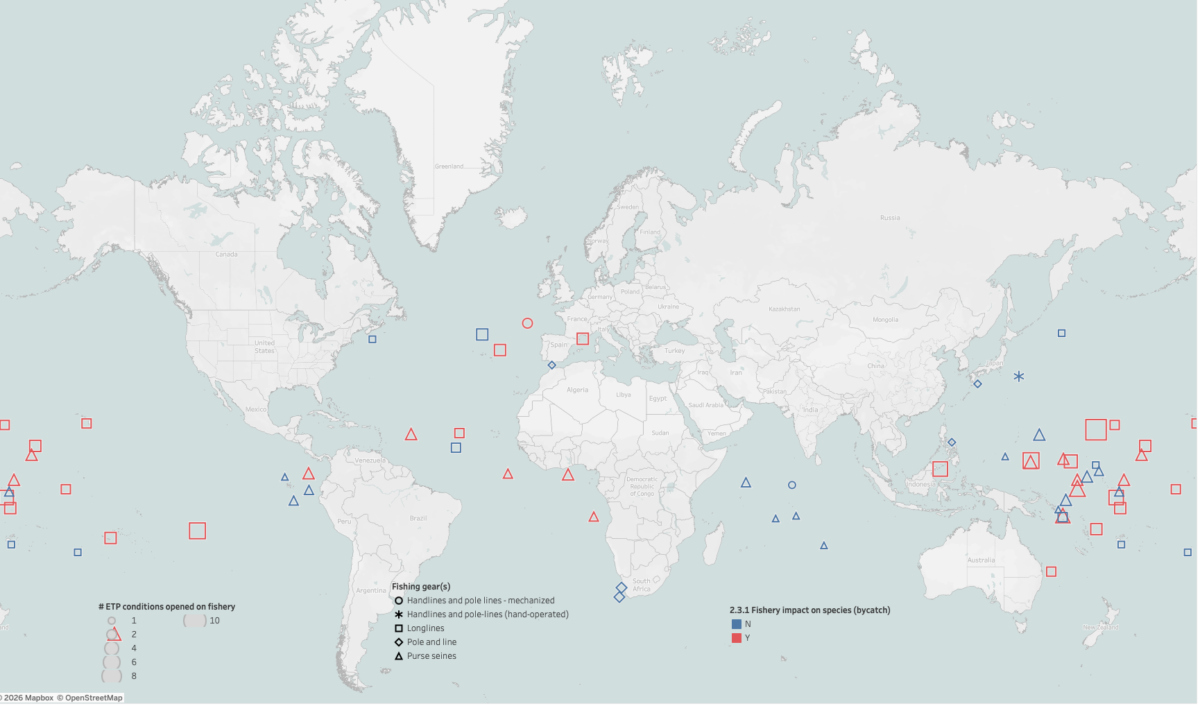
ETP条件が適用されているMSC認証マグロ漁業に関するインタラクティブマップはこちらをクリックしてください。このマップには、対象となる魚種群、条件の適用状況、および関連する持続可能性上の課題などが表示されています。
SFP また、ISSFおよびGlobal Fishing Watchと連携し、マグロ漁業におけるデータ透明性をさらにSFP 。
ISSFの新たな報告書『マグロ漁業が非マグロ種およびその他の環境面に及ぼす影響:2026年版』では、さまざまなマグロ漁法が非マグロ種に与える主な影響に加え、生息地などへのその他の環境影響についても検証している。
ISSFの新たな報告書『2025年7月時点におけるMSC認証マグロ漁業の操業条件の概要』は、MSC認証を受けたマグロ漁業のすべての操業条件をまとめ、分析したものであり、これらの漁業が認証を維持するために直面している主な課題について、包括的な概要を提供しています。
Global Fishing Watchが最近発表した記事「透明性が水産物サプライチェーンの再構築にどう役立つか」では、透明性が水産業界における説明責任の確保に不可欠であることが強調されている。透明性があることで、ステークホルダーは違法漁業や人権侵害といった隠れたリスクを特定し、その影響を軽減することができるからだ。
船舶ごとのデータや傾向を分析し、世界的なマグロのサプライチェーン全体における透明性の確保と改善を支援します。
水産企業が責任ある調達体制の強化や、サプライチェーンの透明性に対する高まる期待に応える取り組みを進める中、漁業活動を把握し、マグロのサプライチェーン全体での改善を支援するためには、船舶単位の情報へのアクセスがますます重要になってきています。
こうした動向をより明確に把握するため、SFP「マグロ漁船動向レポート」では、キハダマグロ、カツオ、メバチマグロなど、商業的に重要なマグロ種を漁獲対象とするMSC認証漁業14件に関連する延縄漁船456隻を分析しています。 本分析では、Global Fishing Watch(GFW)の漁船活動データと、International Seafood Sustainability Foundation(ISSF)の透明性および持続可能性に関する情報を組み合わせ、漁船による透明性イニシアチブへの参加状況、漁獲活動、海上での操業パターン、および混獲に関するベストプラクティスの導入状況を調査しています。
本報告書および付随するインタラクティブ・ダッシュボードを活用することで、マグロ関連企業や関心を持つユーザーは、船団レベルの動向を分析し、入手可能な船舶情報をより深く理解するとともに、マグロのサプライチェーン全体における透明性の向上と継続的な改善を支援する機会を見出すことができます。
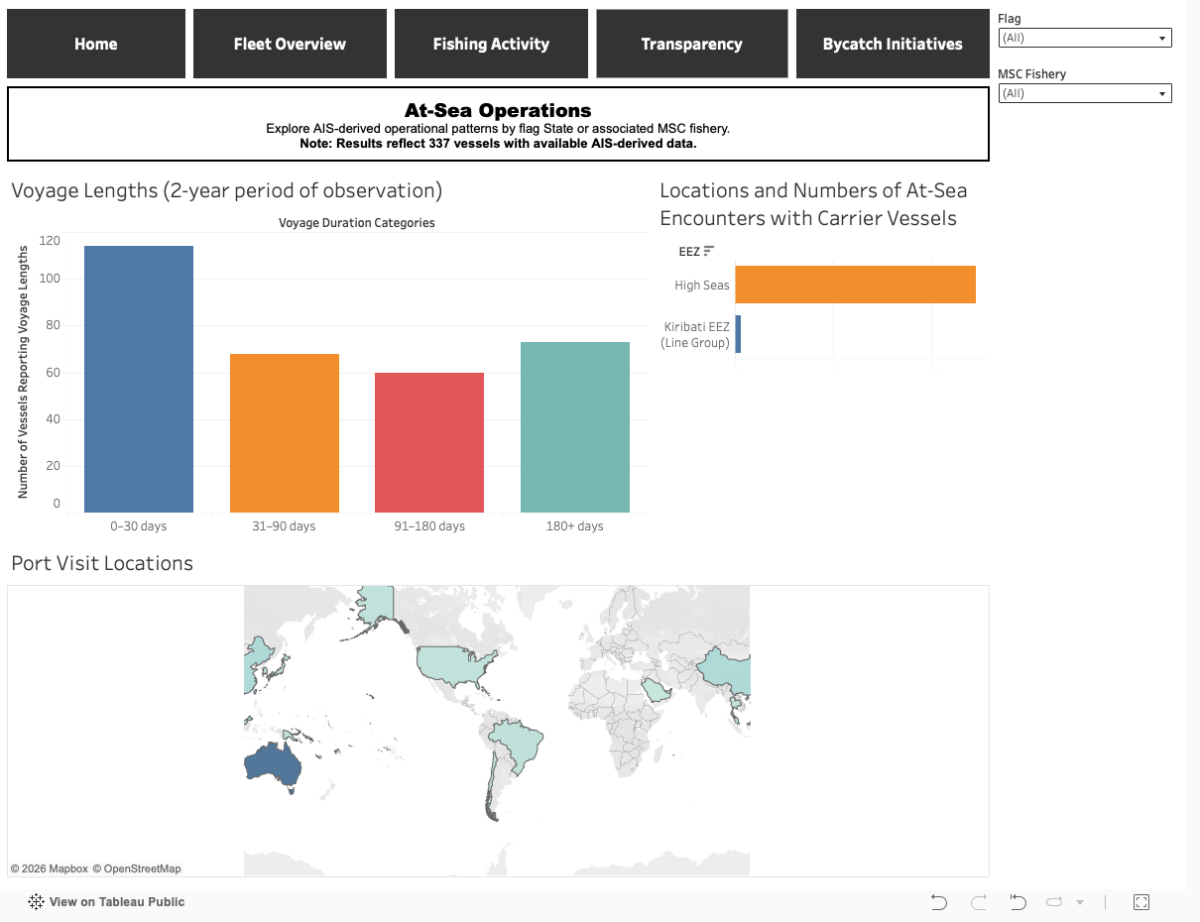
ここをクリックすると、西・中部太平洋のMSC認証漁業に関連するマグロ延縄漁船団の船隊特性、船舶情報の透明性、および海上活動動向を分析できるインタラクティブなダッシュボードが表示されます。
延縄漁で捕獲された缶詰や生鮮/冷凍マグロの購入者は、商業マグロ延縄漁が西中部太平洋のサメ、ウミガメ、海鳥に与える影響を軽減するための行動をとることができる。
Sustainable Fisheries Partnership 研究は、西部中央太平洋(WCPO)における商業マグロ延縄漁業が絶滅危惧種・絶滅危惧種・保護対象種(ETP種)に与える影響をSustainable Fisheries Partnership 。報告書は、同地域で自然環境が深刻な損失を被っており、複数のサメ、海鳥、ウミガメの個体数が70%以上減少したことを示した。
延縄漁は、商業マグロ漁業で使用される漁具の中でも、混獲率が最も高いものの1つです。しかし、サークルフックの使用、夜間の釣り糸の設置、ワイヤーリーダーの排除など、混獲を減らすことができる実証済みのベストプラクティスが存在します。
漁法が改善されれば、マグロと生息域を共有する脆弱な海洋野生生物への脅威を大幅に軽減することができる。
研究サマリーまたはテクニカルレポートの全文を読む。
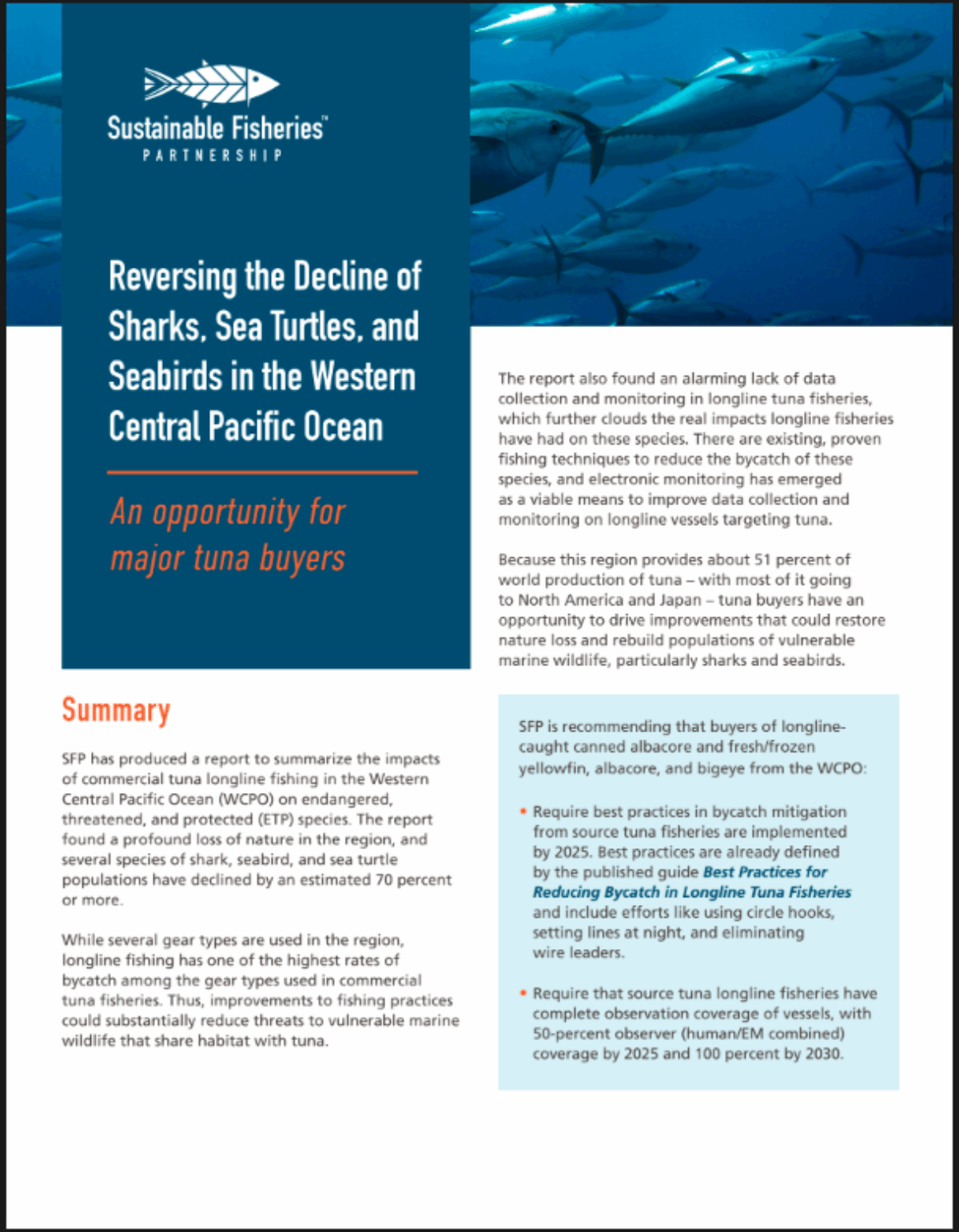
SFP 、中西太平洋海域で延縄漁法により漁獲された缶詰および生鮮・冷凍マグロの購入者に対し、以下のことをSFP :
- 2025年までに、水揚げされたマグロ漁業からの混獲緩和のベストプラクティスを実施することを義務付ける。
- 水揚げされたマグロ延縄漁業は、2025年までに50%、2030年までに100%の漁船を完全に監視することを義務付ける。
SFP 、マグロ供給チェーンにおける混獲削減に取り組む
2027年までに、オブザーバーによる監視を100%実施しているマグロ漁船からのみ調達するというウォルマートのコミットメントについては、こちらをご覧ください。

生物多様性に関するタイ・ユニオンの新たなコミットメント "SeaChange 2030 "の一環として、タイ・ユニオンが調達する船舶の100%が、2030年までに絶滅危惧種、絶滅危惧種、保護対象種を保護するためのベスト・プラクティスを実施する。
マグロ漁業における混獲の削減
太平洋における海洋生物の減少を食い止めるために、皆様がどのように貢献できるかについて詳しく知りたい方は、SFPお問い合わせください。