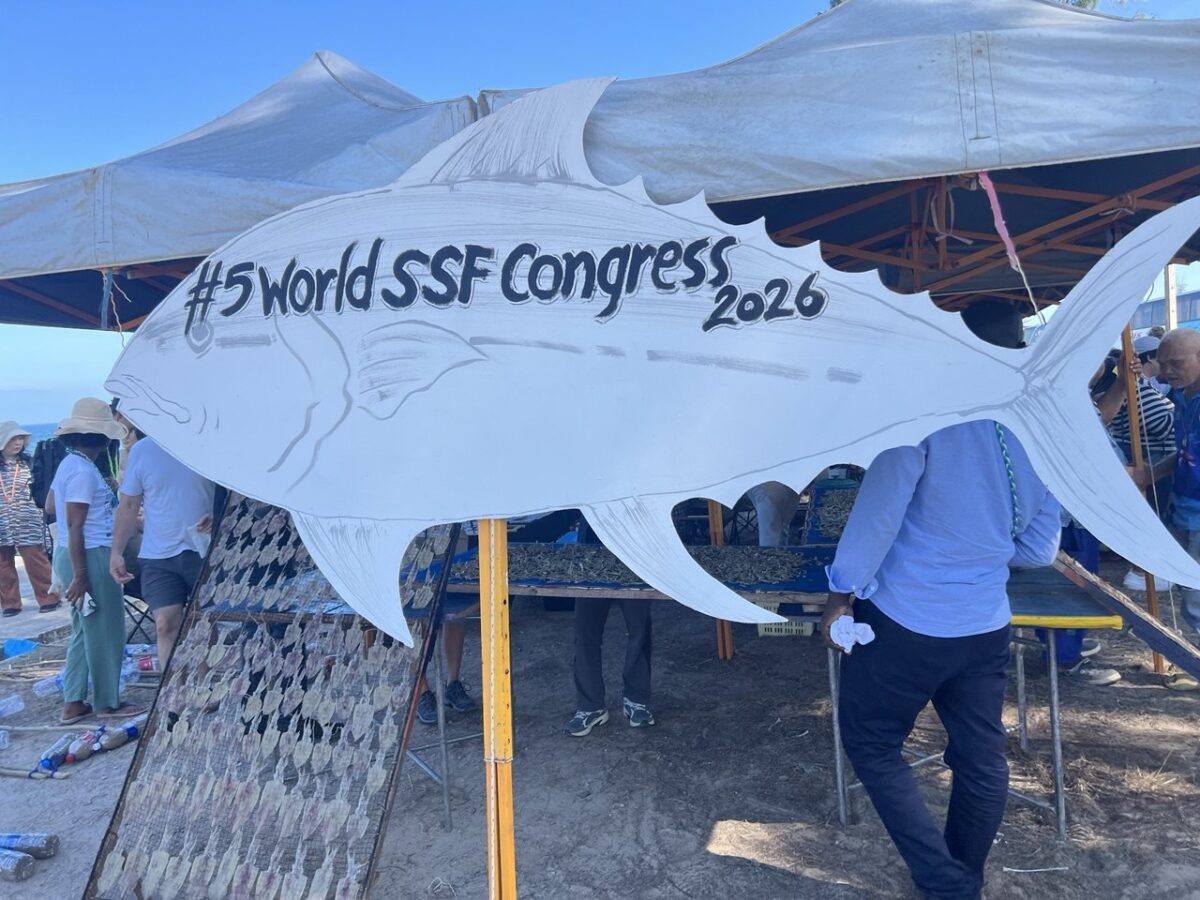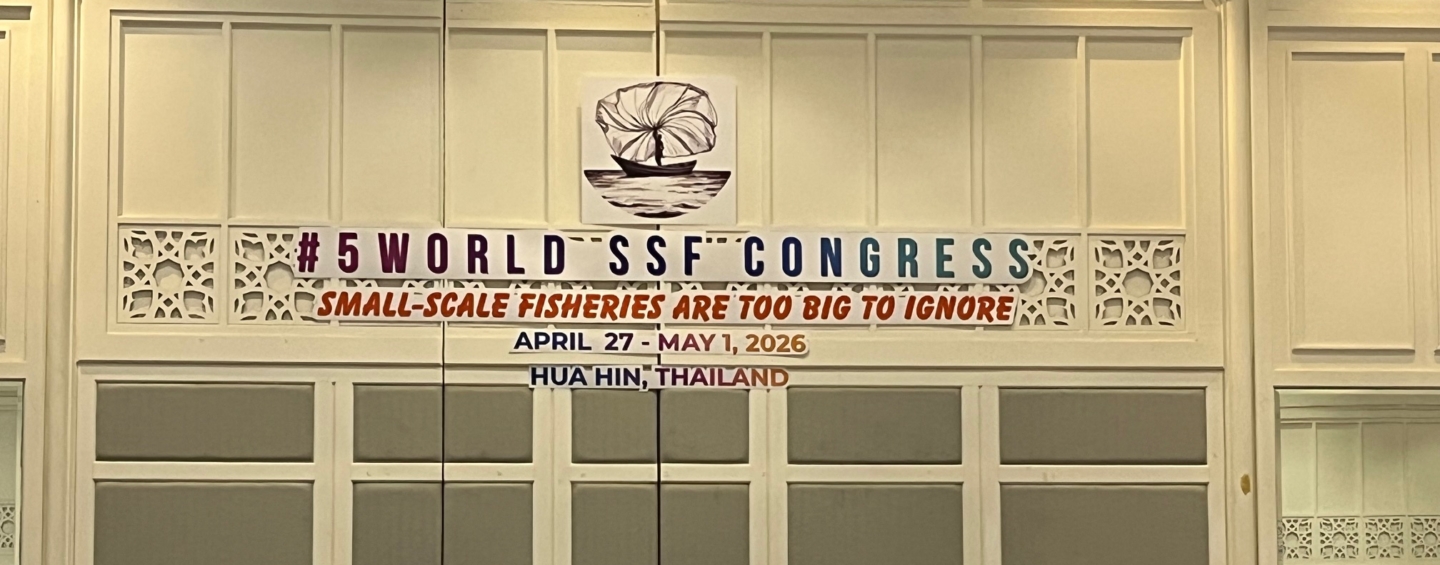
Earlier this month, I participated in the 5th World Small-Scale Fisheries Congress in Hua Hin, Thailand, along with my colleagues Leang On Pong and Miguel Andreu-Cazenave. Together, our presence offered a useful cross-section of how SFP is engaging with small-scale fisheries: through work on governance and livelihoods, through efforts to strengthen market incentives in the Gulf of Thailand, and through the continued development of FishSource as a tool to better understand the governance and social context surrounding fisheries systems.
The Congress itself was a valuable space for learning, exchange, and reflection, bringing together researchers, practitioners, NGOs, development actors, and policymakers working on small-scale fisheries from different regions and perspectives. Across multiple sessions and events, there was a strong commitment to sharing knowledge, identifying common challenges, and building connections across disciplines and geographies. In a sector shaped by overlapping ecological, economic, and social pressures, that kind of exchange matters.
Markets should complement, not replace, governance
My own participation was linked to SFP’s work on the relationship between governance, livelihoods, and value chains in small-scale fisheries, particularly in relation to the role of market incentives and supply chains in helping reinforce responsible fisheries management. One of the key ideas I brought into the event, and one that still feels central, is that markets do not replace governance, but they can help reinforce it through traceability, better data flows, stronger incentives, and more predictable relationships across the value chain. Especially in contexts where public management capacity is limited, that complementary role can be important. But it remains just that: complementary. Public authorities, communities, and fishers themselves remain central to legitimacy, stewardship, and long-term governance.
This broader point stayed with me throughout the Congress. If we want small-scale fisheries systems to become more responsible and resilient, it is not enough to generate knowledge or isolated improvements. We need to reshape behaviours, incentives, and relationships across the entire production system. That means recognising both rights and responsibilities across fishers, buyers, traders, processors, exporters, governments, NGOs, researchers, and funders. It also means acknowledging that those who benefit most from the system — particularly businesses along the value chain — should contribute more to sustaining it.
Aligning governance with practical incentives
That perspective was also reflected in the participation of my colleague Leang On Pong, from Cambodia, who attended the Congress as part of SFP’s broader engagement in the GoTFish project. That work is exploring how market incentives and value-chain approaches can help support better fisheries management and more sustainable outcomes for shared stocks in the Gulf of Thailand. His presence was a reminder that SFP’s engagement in small-scale fisheries is not only conceptual or analytical, but also grounded in ongoing regional efforts to align governance reforms with practical incentives that can work for fishers and fisheries systems on the ground.
Systematically assessing fishers’ rights and participation
A third important SFP contribution came from my colleague Miguel Andreu-Cazenave, from Spain, who presented two new indicators that SFP has developed within FishSource to assess fisheries performance in two areas that are especially important for understanding the context in which small-scale fisheries operate: Security of Tenure Rights (STR) and Participatory Management (PM).
These two indicators speak directly to issues that were repeatedly raised across the Congress. The first looks at the extent to which small-scale fishers’ access and tenure rights are secure and respected. The second looks at the degree to which small-scale fishers are involved in decision-making processes. Together, they help capture two governance dimensions that are critical to the long-term viability of small-scale fisheries: whether fishers can rely on stable and legitimate access, and whether they have a meaningful role in shaping the rules that affect them.
I found Miguel’s contribution particularly relevant because it connected recurring themes from the Congress — justice, rights, legitimacy, and inclusion — with something practical and operational. Too often, these issues remain at the level of principle. What his presentation suggested is that they can also be assessed more systematically and, over time, better integrated into decision making and improvement processes. From an SFP perspective, this feels like an important direction of travel: improving our ability to understand not only how fisheries are managed biologically, but also the governance conditions under which small-scale fishers operate. (See Pedro’s blog on the Right to Food for more about the importance of secure tenure rights and participatory management.)
Representation and inclusion are vital
One of the most important questions I left with concerns representation. Although the Congress was dedicated to small-scale fisheries, the direct presence of small-scale fishers themselves appeared limited. Language is one barrier: a global Congress conducted in English inevitably excludes many of the people whose realities it seeks to represent. Cost is another: for many grassroots organisations and fishing communities, participation in international forums remains financially out of reach.
This matters because representation shapes legitimacy. In a forum intended to elevate the visibility of small-scale fisheries, it was not always clear that there was a strong and organised voice from the sector itself helping drive the agenda. Academia and NGOs played a major role in shaping the discussion. Their contributions are indispensable, but they are not a substitute for stronger participation and leadership from small-scale fishers and their organisations.
If small-scale fisheries are to occupy the place they deserve in global sustainability and development debates, the spaces built around them will need to become more representative, more open, and more capable of accommodating leadership from the sector itself, alongside academia, NGOs, governments, and market actors.
Engagement with supply chains and markets is also key
This also connects to another striking gap I observed at the Congress: the near absence of supply-chain and market actors. I found that surprising because support for market access came up repeatedly as a critical pathway for improving livelihoods, sustaining improvement efforts, and strengthening resilience in small-scale fisheries systems. Yet many of the actors who shape those opportunities and incentives were largely absent from the room.
That absence matters. If we want to understand how small-scale fisheries systems evolve, we cannot focus only on communities, science, and public policy. We also need to engage with markets, value chains, commercial incentives, and how value is distributed across the system. Sustainability is shaped not only in the water or in management plans, but also through market relationships and business decisions.
More broadly, the Congress reinforced for me the importance of better linking communities, knowledge, and government in ways that support meaningful co-management. Inclusive governance remains essential if we want to balance livelihood and environmental outcomes. And if we are serious about the future of the sector, we should also think not only about networks of young researchers, but about how to support stronger networks of young small-scale fisheries leaders.
Challenges and opportunities
I left Hua Hin feeling both encouraged and challenged. Encouraged by the energy, commitment, and insight present across the Congress. Challenged by the unresolved tensions it also revealed: representation without sufficient sector leadership, interdisciplinarity without fully multi-stakeholder engagement, and sustainability debates that still too often fail to connect governance, markets, and human rights in sufficiently practical ways.
If the global agenda on small-scale fisheries is to become genuinely transformative, the spaces that shape it will need to evolve as well. They will need to be more inclusive, more representative, and more open to leadership from the people whose lives and livelihoods are most directly at stake. They will also need better tools to understand fisheries systems more holistically, including the governance and human rights conditions that underpin long-term sustainability. Only then can the growing body of knowledge around small-scale fisheries become part of a truly global movement capable of placing the sector where it belongs.
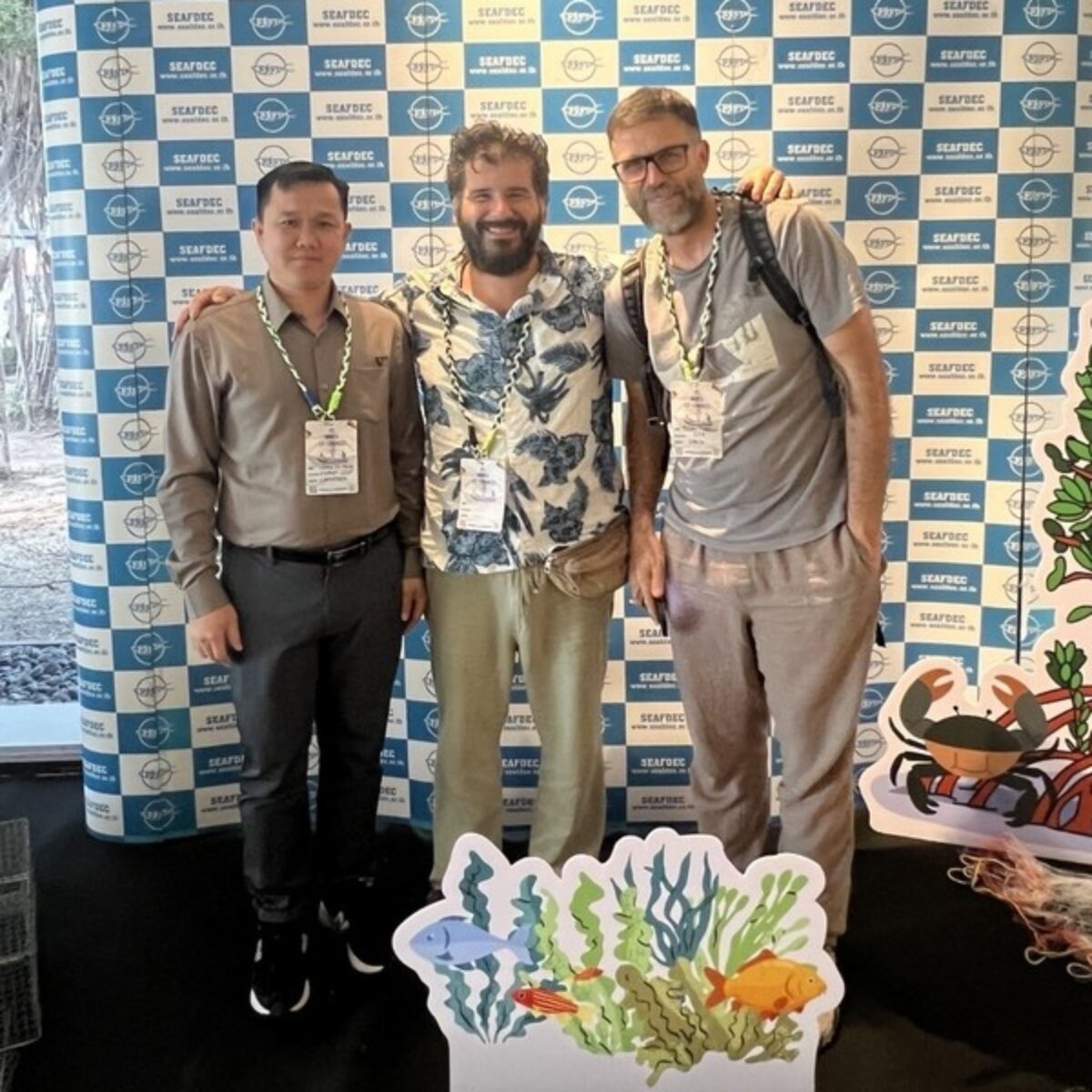
Leang On, Miguel, and Pedro at the Congress