Protecting Ocean Wildlife
Gear Innovation
Transitioning to on-demand gear can ensure a sustainable future for lobster and crab fisheries and protect whales.
American lobster, Jonah crab, and snow crab are important fisheries for the United States and Canada, contributing significant economic value and generating large quantities of seafood for domestic and international consumption. In the state of Maine alone, the 2023 lobster catch totaled 93 million pounds, valued at over $464 million.
The critically endangered North Atlantic right whale (NARW) faces deadly threats from both vessel strikes and entanglement in rope lines, which stem from crab and lobster traps and pots in areas that overlap with their habitat. Eighty-two percent of North Atlantic right whales bear scars from entanglements with fishing gear and ship strikes.
Because of this threat, fishing areas are increasingly being closed to traditional gear types. While this protects whales, fishers suffer when prevented from accessing the fishing grounds that provide their livelihoods. Participating in on-demand gear trials allows fishers to continue to earn a living amid changing regulations for static rope gear.
What is on-demand fishing?
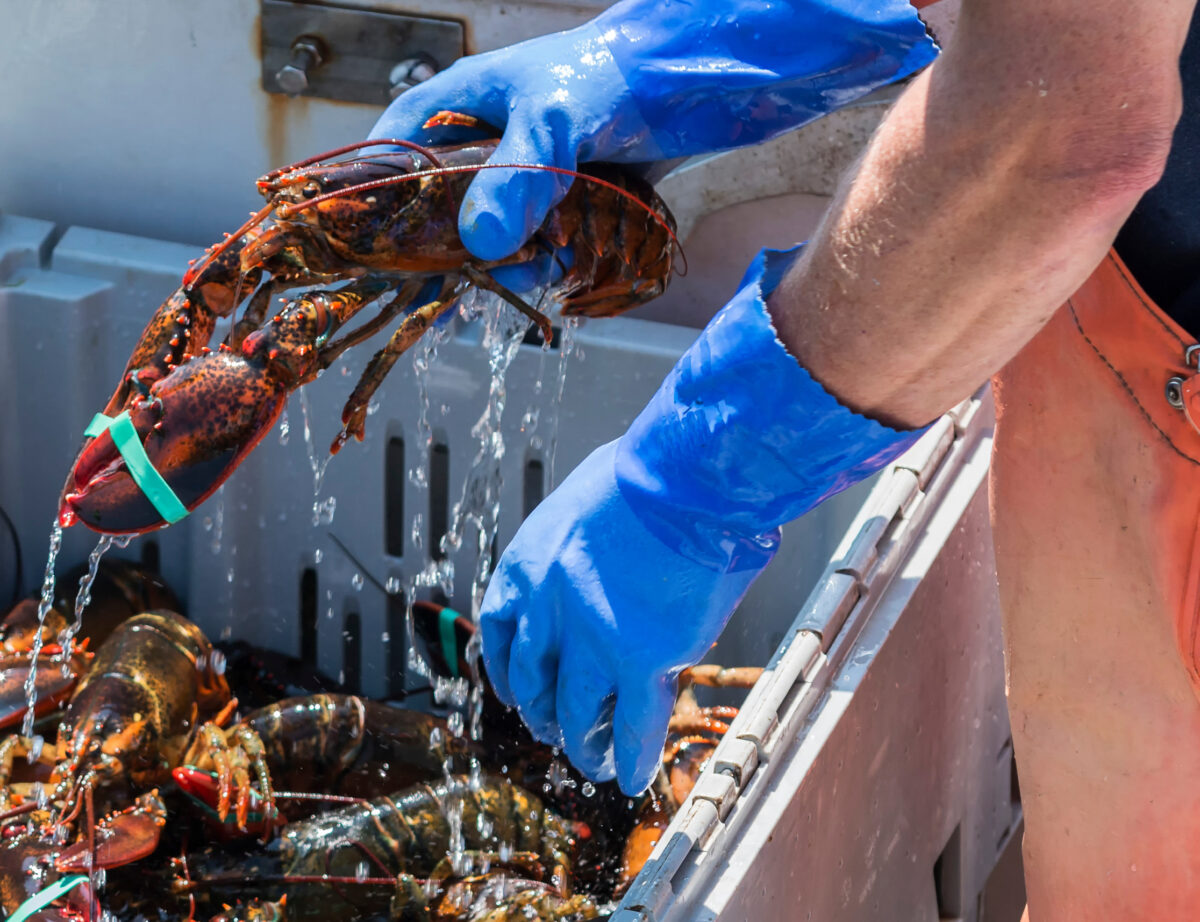
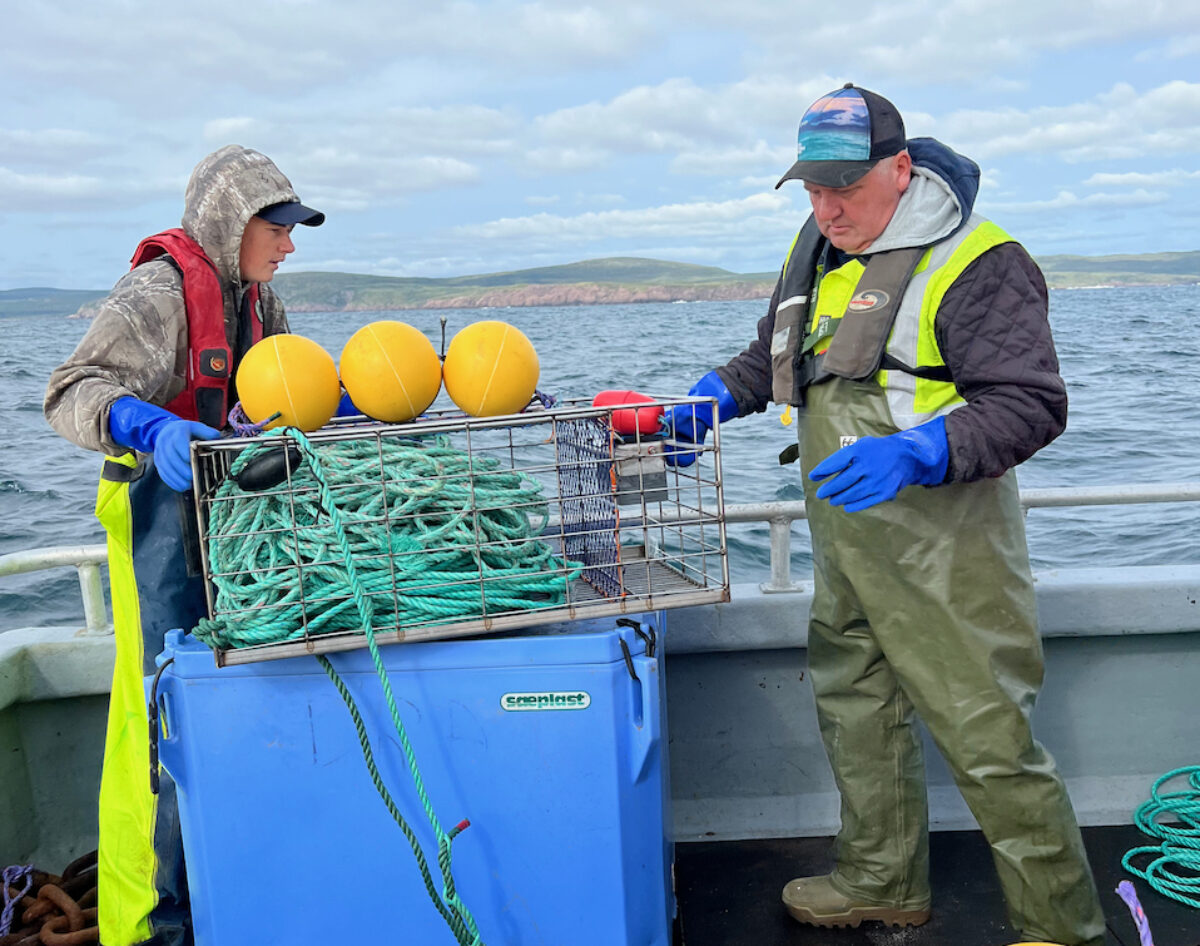
Traditional lobster and crab trap/pot fishing involves rectangular or round fishing traps, normally made of steel and wire mesh with wooden battens. The traps are are strung together in a row on the ocean floor, with a static vertical line extending from the last and/or first trap on the ocean floor to a surface buoy that is are used to locate and retrieve gear. On-demand fishing gear removes the static vertical line to the surface buoy, which presents the primary threat of entanglement, by containing the rope on the ocean floor until it is triggered by a remote release mechanism to surface “on demand.” This method of fishing is also called “ropeless fishing.”
Take Action Now
The adoption of on-demand gear types that use traps but avoid static vertical lines in the water column can help eliminate this threat and allow fishing and whales to coexist.
There is still a long regulatory road ahead, and a variety of management tools and options will likely be explored and debated to address these fisheries’ impacts on whales. In the meantime, gear trials and pilot projects can contribute to getting lines out of the water in areas of high risk to whales, while capturing important feedback from fishers, whose expertise is needed for developing solutions and improving on-demand systems.
SFP encourages the market to support lobster and crab fisheries through these challenges by encouraging the development of solutions to minimize entanglement risk while fishing continues.
- Retailers and major buyers can purchase on-demand gear to be donated to the NOAA Gear Library and the CanFISH Gear Lending Program, which lend on-demand gear to fishers for free, in exchange for the fishers collecting data on their use. They can also express an interest in purchasing product caught with on-demand gear within their supply chains.
- Suppliers and producers can get involved in trials of on-demand fishing gear and existing projects.
Be part of the solution
Learn more about how you can support or participate in piloting on-demand gear.
On-demand gear works
In 2022, on-demand gear was not just trialed, but successfully used to fish in both the US lobster and Canadian snow crab fisheries. Each of these pioneering programs is bringing on-demand gear one step closer to widespread commercial use and removing static lines from the water, reducing risks to whales and other marine wildlife.
-
Gulf of St. Lawrence snow crab fishery improvement project
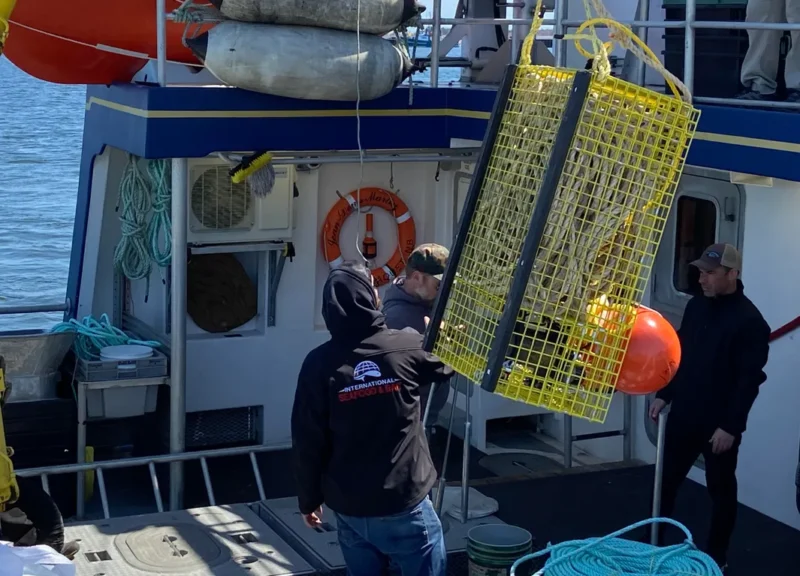
This project has pioneered on-demand fishing systems since 2020. In 2023, 31 participating fishers hauled a total of 865 on-demand crab pots in waters closed to fishing with buoy lines, capturing approximately 107,400 lbs. of snow crab. Although further training of these 31 harvesters took place during 2024, only two harvesters were able to use the equipment during the season, as most fishers caught their quotas before fishing areas closed due to the presence of whales. The FIP was started in part with encouragement from US supermarket chain and longtime SFP partner Publix Super Markets, in response to the fishery’s loss of MSC certification due to interactions with North Atlantic right whales. -
South Atlantic black sea bass fishers use on-demand gear to prevent fishery closures
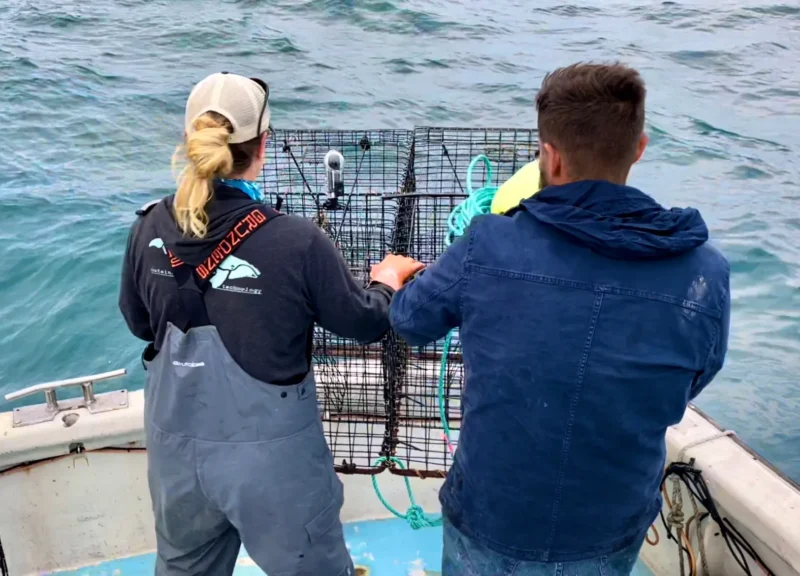
Since 2020, black sea bass fishers in the southeastern US have been trialing on-demand gear under an exempted fishing permit, in hopes of regaining access to fishing grounds that have been closed during winter months to prevent entanglement of North Atlantic right whales that calve off the South Atlantic coast. In 2024 the South Atlantic Fishery Management Council approved on-demand gear as an allowable gear for the fishery. While the calving area is still closed to the sea bass pot fishery in winter, the Council is developing management actions to allow fishing with on-demand gear.
Gear libraries make gear available for piloting
-
Massachusetts
Northeast Fisheries Science Center
The NEFSC gear library has an extensive collection of on-demand systems that they lend to fishermen for testing and feedback, which is then used to improve the gear in real fishing conditions in US northeast Atlantic coast fisheries. -
Nova Scotia, Canada
CanFISH Gear Lending Program
The CanFish Program provides on-demand gear and training to snow crab harvesters throughout Nova Scotia, New Brunswick, and Prince Edward Island, so fishers can continue to have access to fishing grounds closed due to the presence of whales.. -
Maine
Maine Innovative Gear Library
The Innovative Gear Library provides alternative gears and training for Maine pot and trap harvesters who are likely to be impacted by federal rules that will prohibit the use of traditional buoy lines in areas to protect endangered whales. -
California
Marine Sanctuary Foundation
The National Marine Sanctuary Foundation gear library in California collaborates with California dungeness crab harvesters to trial and provide feedback on using ropeless systems in real-world fishing conditions.
Benefits of switching to on-demand gear
- Reduces gear loss
- Reduces ghost gear
- Avoids expensive time-area closures that can disrupt fishing
- Allows fishing to continue in areas where traditional gear cannot be used without endangering whales
Additional Resources
Be part of the solution
Learn more about how you can support or participate in piloting on-demnand gear.