This is part of a series of blogs from SFP staff about our collaborative efforts to improve fisheries management in the Gulf of Thailand through the GoTFish Project. The project brings together a regional, multi-stakeholder initiative, funded by the Global Environment Facility (GEF) and implemented by the Food and Agriculture Organization of the United Nations (FAO), in partnership with the Southeast Asian Fisheries Development Center (SEAFDEC), SFP, and the University of Queensland.
Earlier this year, I visited THAIFEX–Anuga Asia 2026 in Bangkok, a five-day food and beverage show that brings together companies and buyers from across the world. The show offered an exceptional opportunity to see the scale, diversity, and ambition of Thailand’s food industry. This was my third year attending, and I can confidently say it was the largest yet, with more than 3,500 exhibitors filling two massive exhibition halls.
A window into a globally recognized industry
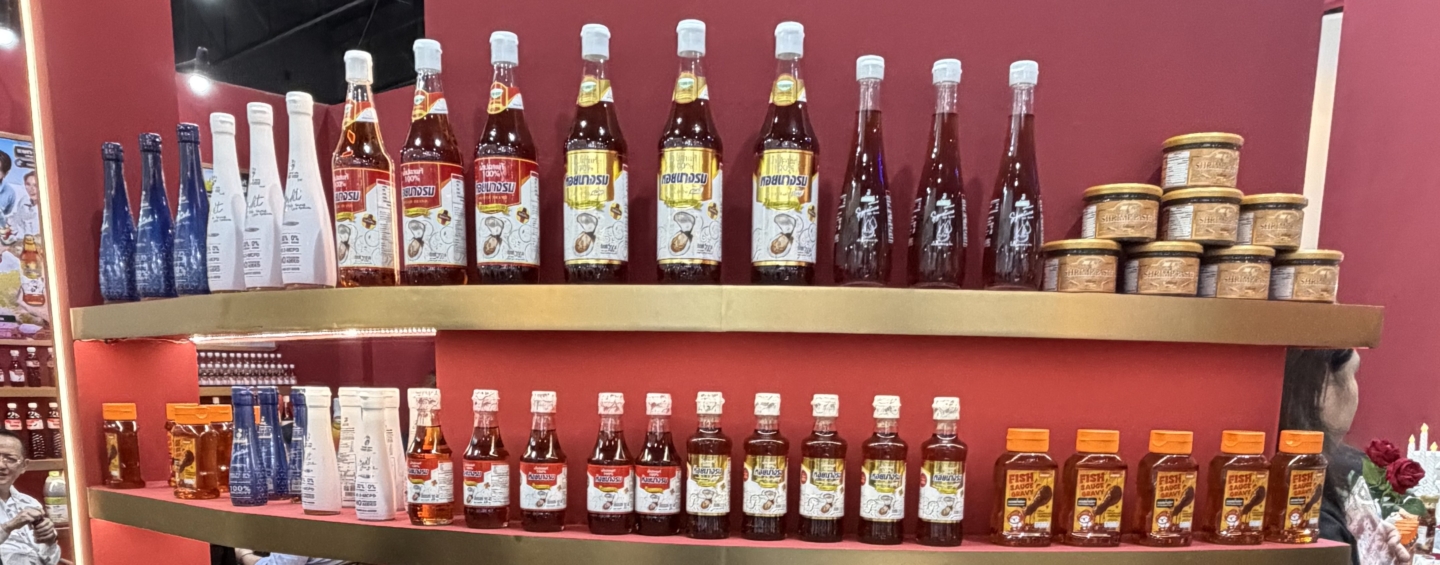
Among the thousands of products on display, fish sauce stood out as both an everyday staple and one of Thailand’s most recognizable food exports. Walking through the exhibition, I was struck by the combination of tradition and modern business capability. Established brands presented products for domestic consumers, mass export markets, and premium international segments, while smaller producers are differentiating themselves through unique fermentation techniques and recipes designed to meet growing consumer demand for healthier and more specialized food options. This diversity reflects both the depth of Thailand’s fish sauce heritage and the industry’s capacity for innovation.
I spoke with representatives from many of Thailand’s leading fish sauce producers. Their openness and willingness to exchange ideas made the conversations particularly valuable. What stood out most was how important international markets have become for them. Although these brands are familiar household names in Thailand, I was surprised by the scale of their global reach and the extent to which exports now drive business growth.
Every bottle begins with a fishery
Behind every bottle of fish sauce is a supply chain that starts at sea. The companies showcasing their portfolios at THAIFEX use different small pelagic species and sourcing strategies. Anchovy-based products are prominent in the premium segment, while round herring is also used in products serving value and mass-market channels.
Yet, what all these products share is a fundamental dependence on healthy fish resources and resilient fishing communities. Fishers, processors, factory workers, exporters, distributors, and retailers all rely on the long-term availability of the marine species used to produce fish sauce. Responsible management of these fisheries is therefore not separate from business performance – it is central to the sector’s future competitiveness and continuity of supply.
Fish sauce is an important part of SFP’s participation in the GoTFish project: Promoting the Blue Economy and Strengthening Fisheries Governance of the Gulf of Thailand through the Ecosystem Approach to Fisheries. Through the project, SFP is working with partners to strengthen market and behavior incentives for sustainable fisheries. One focus is the development of responsible sourcing approaches for the small-scale and artisanal anchovy fisheries supplying the fish sauce sector. The intention is not to impose a generic external model, but to build a realistic pathway through participation by industry, fishers, government institutions, and other relevant stakeholders.
ESG expectations will continue to grow…
My discussions with fish sauce producers at THAIFEX touched on issues of sustainability, responsible sourcing, and changing buyer expectations, particularly in export markets. Encouragingly, many of the companies recognized that environmental and social responsibility will become increasingly important to maintaining competitiveness in international markets. There was genuine interest in exploring how collaboration across the industry could help strengthen sustainability while supporting continued growth, creating a promising foundation for future engagement.
With an increasing number of international exhibitors participating at THAIFEX, I saw a stronger emphasis on sustainability, certifications, and responsible sourcing practices. And these environmental, social, and governance (ESG) expectations in international markets are not a temporary trend. Global buyers, retailers, investors, and regulators increasingly expect seafood companies to understand and manage risks throughout their supply chains. Over time, questions about where seafood comes from, how fisheries are managed, how workers are protected, how local communities benefit, and how progress is verified, will become more stringent.
For fish sauce producers, this evolution has direct commercial relevance. Product quality and food-safety certification will remain essential, but they may no longer be sufficient on their own to satisfy every customer. Companies that can provide credible evidence on traceability, responsible sourcing, fisheries management, ecosystem impacts, labor and community considerations, and transparent improvement will be better positioned to protect their market share.
…providing an opportunity for the fish sauce sector
This trend creates an opportunity for Thailand’s fish sauce companies to collaborate on an industry-led ESG and responsible sourcing strategy. A shared approach could help the sector establish common priorities, improve traceability and information, support better fisheries management, recognize the role of fishing communities, define measurable indicators, and communicate progress credibly. This will, in turn, help the industry protect access to existing markets, prepare for emerging requirements, strengthen confidence among customers, and reduce long-term raw material risk. It can also create a powerful point of differentiation for Thai fish sauce in an increasingly competitive global marketplace.
Through the GoTFish project, SFP and partners will offer support for this process. While the project does not provide commercial endorsement or guarantee market access, its value is to support credible, transparent improvement and collaboration. Participating companies remain responsible for their own commitments, performance and claims.
Why SFP’s global market network matters
SFP’s contribution to this project goes beyond technical knowledge of fisheries sustainability. For over two decades, we have worked across global seafood supply chains, building relationships with actors ranging from fishers and processors to suppliers, foodservice companies, and major retailers. Our corporate network includes over 30 partners in more than 15 countries, with substantial engagement in the major seafood markets of North America, the European Union, and the United Kingdom.
Working closely with these businesses provides practical insight into how buyer expectations are changing. Many multinational retailers and foodservice companies develop sourcing policies that influence not only their home markets, but also suppliers and subsidiaries in other countries. As a result, expectations established in North America, the EU, or the UK can progressively become reference points across a much wider part of the global food trade.
This presents a significant opportunity for Thailand’s fish sauce industry. By leveraging our fisheries expertise and knowledge of evolving global market trends, SFP can play an important role in bridging emerging buyer expectations with practical solutions suited to Thailand’s anchovy supply chains. Equally important, SFP can help communicate the industry’s sustainability progress by sharing credible, evidence-based developments from Thailand with international buyers and industry platforms, while also bringing valuable market insights back to producers and other key stakeholders.
An invitation to shape the future together
Ultimately, the future of Thailand’s fish sauce industry should be shaped by the industry itself. SFP’s role is not to set the agenda, but to support it—bringing together technical expertise, market knowledge, practical improvement tools, and international connections to help build a responsible sourcing approach that is locally owned, commercially relevant, and globally recognized.
My visit to THAIFEX confirmed the strength and international potential of Thailand’s fish sauce industry and highlighted the opportunity to complement the sector’s well-established messages on quality, authenticity, and food safety with a stronger story about the fisheries and communities that make every bottle possible.
The international market will continue to raise its expectations. Thailand can respond company by company, or it can use GoTFish as a platform to build a coherent, ambitious, and industry-led strategy. By combining Thailand’s product heritage and manufacturing leadership with the institutional support of FAO and SEAFDEC, and SFP’s fisheries expertise and understanding of global buyer expectations, the sector can protect its competitiveness while helping secure the resources on which it depends.
The ambition should be clear: to position Thailand not only as one of the world’s leading producers and exporters of fish sauce, but as the world’s most advanced fish sauce industry in environmental, social, and governance performance.
For companies that want to help shape that future, GoTFish welcomes the opportunity to collaborate.
What leadership could look like
Thailand already has many of the ingredients needed to lead: a globally recognized product, experienced manufacturers, strong export capabilities, established quality systems, and a rich cultural heritage. The next step is to connect these strengths with a collective sustainability vision.
Through GoTFish, the industry could work together toward:
- A shared ESG and responsible sourcing roadmap for the fish sauce sector
- Greater visibility over the species, fishing areas, and fishing practices behind raw material supply
- Practical support for fisheries assessment, management, and continuous improvement
- Credible environmental and social indicators, with transparent reporting of both progress and remaining gaps
- Stronger participation by fishers and coastal communities, including women, in decisions that affect the value chain
- Alignment between corporate sourcing policies and the responsible sourcing scheme developed through the project
- Coordinated communication with buyers and international markets, avoiding unsupported claims and reducing greenwashing risk.
This is not simply a communications exercise – it is about demonstrating it. Credibility will depend on clear baselines, practical actions, measurable milestones and public evidence of improvement. But when communication is supported by genuine progress, sustainability becomes a source of trust and competitive strength.
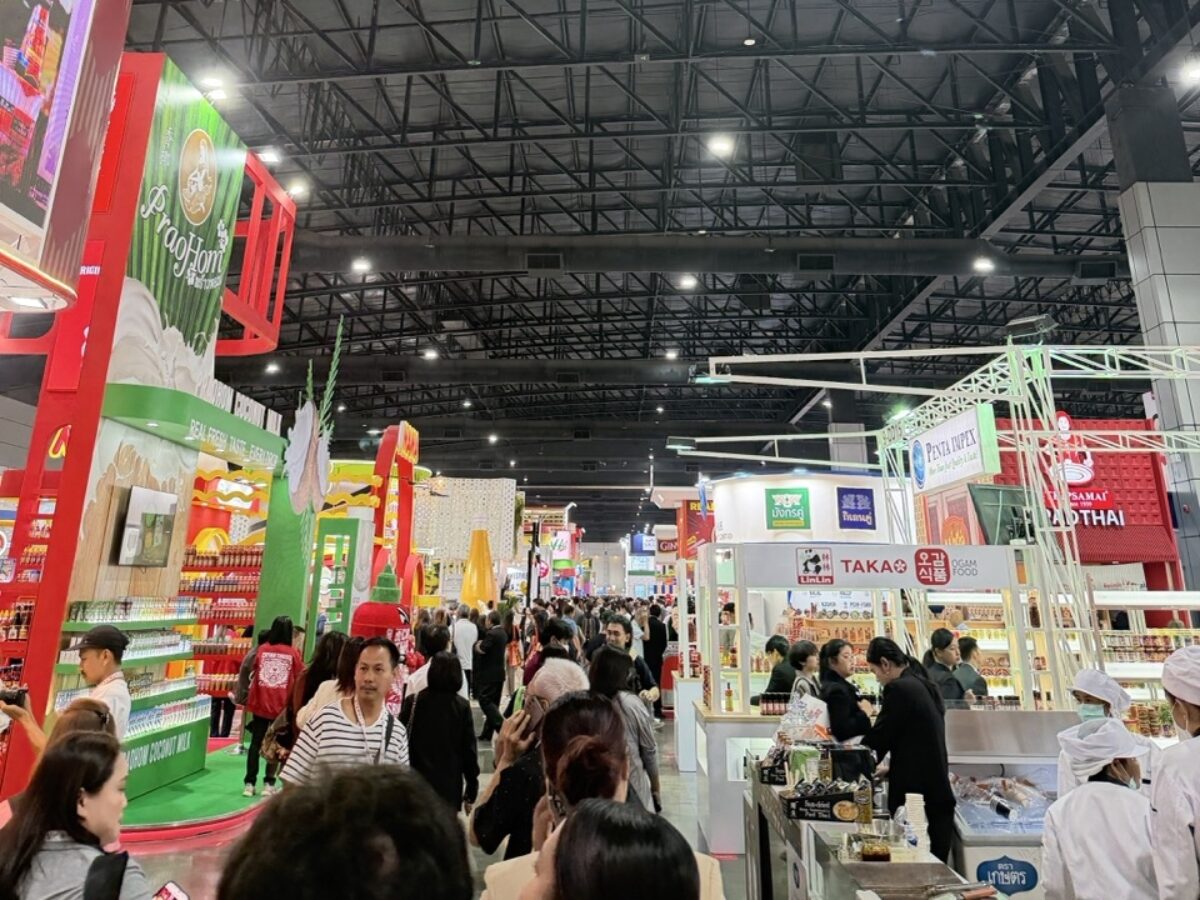
The sprawling floor of THAIFEX–Anuga Asia 2026. Credit: David Phillips.