Fisheries technology works. That was my key takeaway from my experience at the Seafood and Fisheries Emerging Technologies (SAFET) 2026 Conference in Cebu, Philippines, last month. Electronic monitoring (EM) is now tailored to individual fleets, traceability tools can capture transshipment weights at sea, and autonomous vessels are patrolling marine protected areas. The harder question now is implementation of this technology, and the seafood industry is poised to take a leading role.
Why industry should be in the room
During the conference, SFP hosted a side event spotlighting bycatch solutions, implementation challenges, and how the seafood industry can help. Around 30 solutions providers, scientists, government representatives, and NGOs came together to discuss how to communicate bycatch reduction impacts across supply chains and finance their long-term use. By the end of the session, four messages were clear:
There’s a disconnect between service providers and the seafood industry:
One of the biggest challenges solutions providers raised was uncertainty about industry priorities and on-the-water needs. The lack of seafood industry representatives at SAFET was a stark indicator of that sentiment. Conferences like SAFET serve as incubators for leading tech providers to reevaluate priorities and chart their future course. Industry’s absence means those decisions are being made without industry input, despite its growing role as an implementer on the water. Making a larger collective push to include industry representatives in future events is an obvious way forward.
Impact communications have to bridge the worlds of science and business:
Solutions providers addressed the importance of more effectively translating the scientific impact of bycatch reduction into the language of business. One bridge lies in an industry necessity: traceability. Digital traceability platforms help ensure that data points get communicated across supply chains in formats businesses already use. Integrating bycatch reduction impacts into these systems so buyers can see bycatch performance alongside the rest of their sourcing data could speak to both worlds. The question is: which impacts to capture and how? That’s where industry input is essential. Resources like the Global Dialogue on Seafood Traceability (GDST) Standard could help make this connection within seafood supply chains.
Bycatch solutions need a business case, and time to show it:
Business cases for bycatch reduction solutions are limited, but not because these tools don’t have serious upsides. Translating scientific impacts directly into business benefits such as cost savings or efficiency improvements is hard to do. But participants pointed to value beyond cost savings. For instance, there’s real reputational risk in overlooking proven bycatch reduction methods. Timing matters too: rapidly shifting commercial priorities can leave solutions providers with very narrow windows for implementation, which hinders progress. Impacts on the water take time, and long-term, sustainable investment from both the scientific community and industry are necessary.
Who pays? Industry can help design the answer:
Funding, and who provides it, remains a large barrier to reducing bycatch. Many solutions providers weave together a disjointed patchwork of funding just to put their tools to use. UK-based environmental finance firm Finance Earth gave an insightful presentation on co-financing approaches that can help keep critical bycatch reduction tools in use. The most effective approach seems to be varied funding sources growing together. So who pays? This is where the seafood industry can have real influence, by helping lead the design and implementation of these funding models. Advances in technology can go only as far as the funds sustaining them, and the industry is a crucial part of building those foundations.
Tech spotlight: Trends worth knowing
While we learned a lot during our side session, it wouldn’t be a tech conference without some very impressive tools to highlight. Although it’s challenging to catalogue each innovation, three themes stood out:
Electronic monitoring (EM)
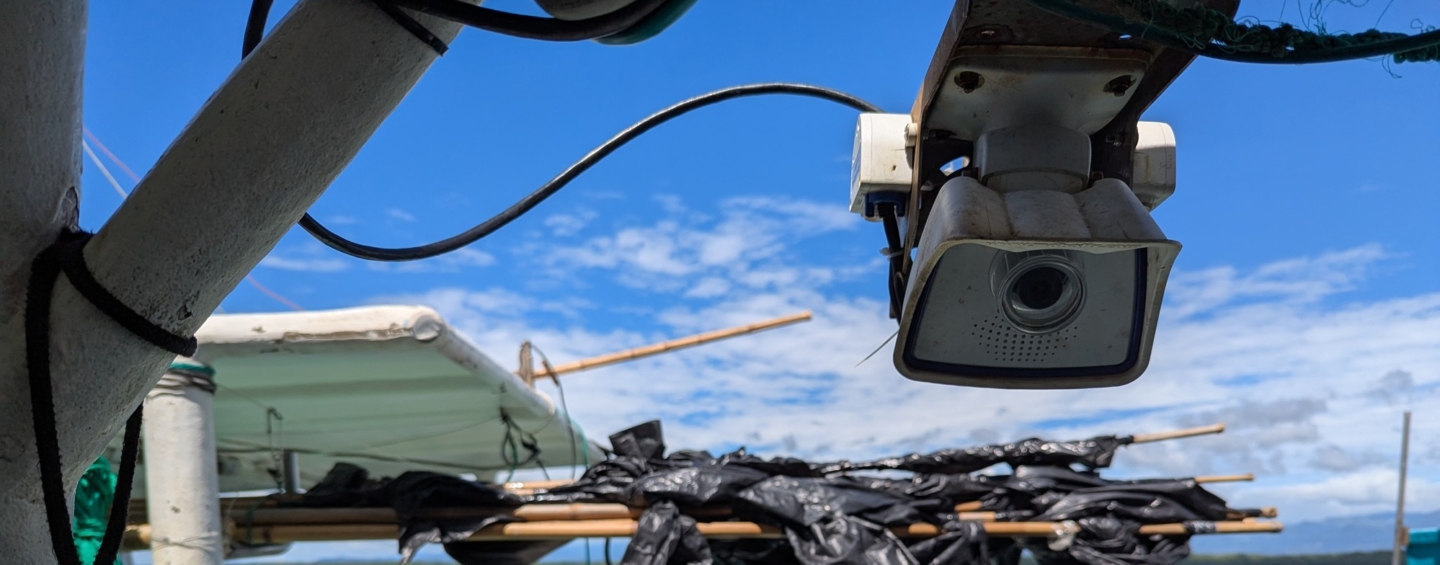
EM systems have come a long way. They’re now tailored to diverse regulatory environments, vessel profiles, and operational needs such as bycatch and crew welfare monitoring. Put simply, you can’t just slap a camera on a vessel and check a box, and solutions providers understand this more than anyone. A big piece of ensuring these systems work lies in integrated tech packages, where EM footage is combined with data from other onboard systems like electronic logbooks and VMS for a comprehensive transparency system.
The industry angle: EM gives companies independent, verifiable data on what happens at sea, from catch and bycatch to crew conditions. This strengthens supply chain transparency and helps meet rising buyer and regulatory expectations. It can also extend monitoring to fleets where human observers are impractical or unsafe. One of the biggest challenges to implementation remains cost, specifically that of EM footage review, which accounts for a substantial share of investment throughout the technology’s lifecycle. Although AI review of footage shows promise, experts generally maintain it needs more development to be reliable. Exploring shared funding models between supply chain actors, fleets, and other implementers will be critical to help spread costs.
Digital traceability
Traceability is a broad term, and the tech looking to contribute to it within modern supply chains has equal breadth. Showcases featured mobile apps capable of on-the-water species identification and fully automated traceability platforms that can digitize and monitor entire seafood workflows. The sheer amount of data these tools can capture and report is impressive.
The industry angle: Traceability tools only help at scale if they’re standardized and interoperable. If these systems all start speaking the same “language,” they can work together to fill data gaps across supply chains. The GDST Standard is a great example: its key data elements are being applied both within businesses and in regulatory traceability systems such as Indonesia’s STELINA.
Artificial intelligence
The role of AI was at the forefront of almost every discussion. However, there remain far fewer proven use cases in the seafood sector than in other industries. Conference attendees highlighted ongoing studies and pilots to help fill that gap. AI can make EM footage review cheaper, compile large amounts of traceability data, help predict the migration of endangered, threatened, and protected (ETP) species for bycatch mitigation, and support vessel risk detection and enforcement planning for authorities. One to watch: uncrewed vessels that use AI to patrol critical areas such as marine protected areas (MPAs) and track vulnerable species, with less impact on marine life than larger, traditional vessels.
The industry angle: While on-the-water applications are still largely in the pilot stage, AI has already demonstrated a large net impact on business functions such as document retrieval and fleet management. These uses can drastically improve sourcing data management, traceability, and vessel operations at sea.
Looking ahead: From innovation to implementation
SAFET made it clear that we’re now in the phase of implementing an array of impressive technologies, and that implementation faces steep challenges across sectors. Regulators have to keep pace with evolving technologies, solutions providers need a stable funding base, and the coastal communities using many of these solutions can’t continue to be left out of their development and market access benefits.
Luckily, the seafood industry is uniquely placed to work across each of these areas and help usher in more widespread and effective implementation of these technologies. Industry has the capacity and positioning to align cutting-edge advances with business realities, leverage existing traceability systems, and spearhead innovative co-financing approaches that benefit businesses, regulators, and communities alike.