
Impact Stories
Industry collaboration brings the Barents Sea cod fishery back from the brink
(and they may need to do it again)
The rebound of Barents Sea cod is one of the earliest examples of industry collaboratively tackling issues that threaten the sustainability of a fishery – but it is also a cautionary tale about the importance of staying engaged, even after a fishery is certified.
The Barents Sea is home to the world’s largest cod fishery and an important supply of cod for Europe, North America, and other markets. Located off the northern coasts of Norway and Russia, and including parts of the Arctic High Seas, the area is a primary nursery and feeding area for cod in the Northeast Arctic region. But by the early 2000s, overharvesting, management shortfalls, and habitat and ecosystem impacts had pushed the fishery to the brink of collapse.
The story of how a broad coalition of stakeholders helped rebuild the fishery represents one of the earliest examples of collaboration among industry, governments, and NGOs working toward a shared goal. It also, in a way, led to the founding of SFP.
But today, the fishery faces multiple challenges, including declining stocks, impacts to vulnerable ocean wildlife and ecosystems, and growing illegal fishing – challenges that may threaten the ecosystem, the stock health and, ultimately, the fishery’s status as a success story.
A timeline of collaborative management in the Barents Sea cod fishery
Management controls cannot stem illegal fishing
1970s: Russia and Norway begin working together to manage the fishery. Starting in 1976, the Norwegian-Russian Joint Fishery Commission sets annual total allowable catches (TACs) and national quotas for each cod-fishing season, which runs from September to February.
1980s and 1990s: Despite the quotas, illegal overfishing vastly reduces fish stocks in the region.
Late 1990s: Illegal fishing is still widespread, despite established monitoring, control, and surveillance (MCS) systems. There is also no system in place at the Norwegian Directorate of Fisheries (FiskDir) to systematically cross-check and analyze inspection reports and control documents generated by the Norwegian Coast Guard or key port authorities in the Netherlands and Germany. A small Norwegian task force inside FiskDir is established to systematize this work, laying the groundwork for improved MCS activities at sea and in ports.
The earliest industry engagement
2002-3: Years before creating SFP, our founder and Chief Executive Officer Jim Cannon, in his role at Conservation International, works with McDonald’s, Walmart, and other companies to understand and address risks to their supply chains from the collapse of whitefish and other fisheries.
Cannon works with the head of fish procurement at McDonald’s, who asks leading suppliers to arrange meetings with key fisheries ministers to discuss improvement needs across a range of fisheries, including Barents Sea cod. This is the first test of whether major fish buyers and suppliers can engage governments on fisheries management – and the answer is yes.
2005: The Barents Sea fishery stands on the brink of collapse due to overfishing. Illegal landings of nearly 170,000 tonnes push the total harvest in the fishery to 35% above the quota, undermining management and threatening the long-term health of the fishery.
2005-2006: Cannon works with McDonald’s and Walmart to adopt sustainability commitments for their seafood supply chains, driven by the situation in the northern whitefish fisheries.
The wider industry begins to act and SFP is born
January 2006: An investigative television expose and NGO campaign expose the illegal cod trade and raise awareness about the problem in Europe.
February – August 2006: Leading European importers work with Cannon (and later SFP after its founding) to develop and individually apply “control documents” to prevent the sale of illegally caught fish by requiring their suppliers to only buy from vessels that are fishing legally, as verified by independent audits. Illegal over-quota catches decline to 67,000 tons, still 14% above quota, but well below 2005 levels.
September 2006: The European Fish Processors and Traders Association (AIPCE) standardizes a common control procedure, based on what individual companies are already doing.
November 2006: Cannon founds Sustainable Fisheries Partnership, to take this model of industry involvement global and engage more companies and fisheries. McDonald’s and Walmart become SFP’s first corporate partners.
The first formal industry FIP is formed
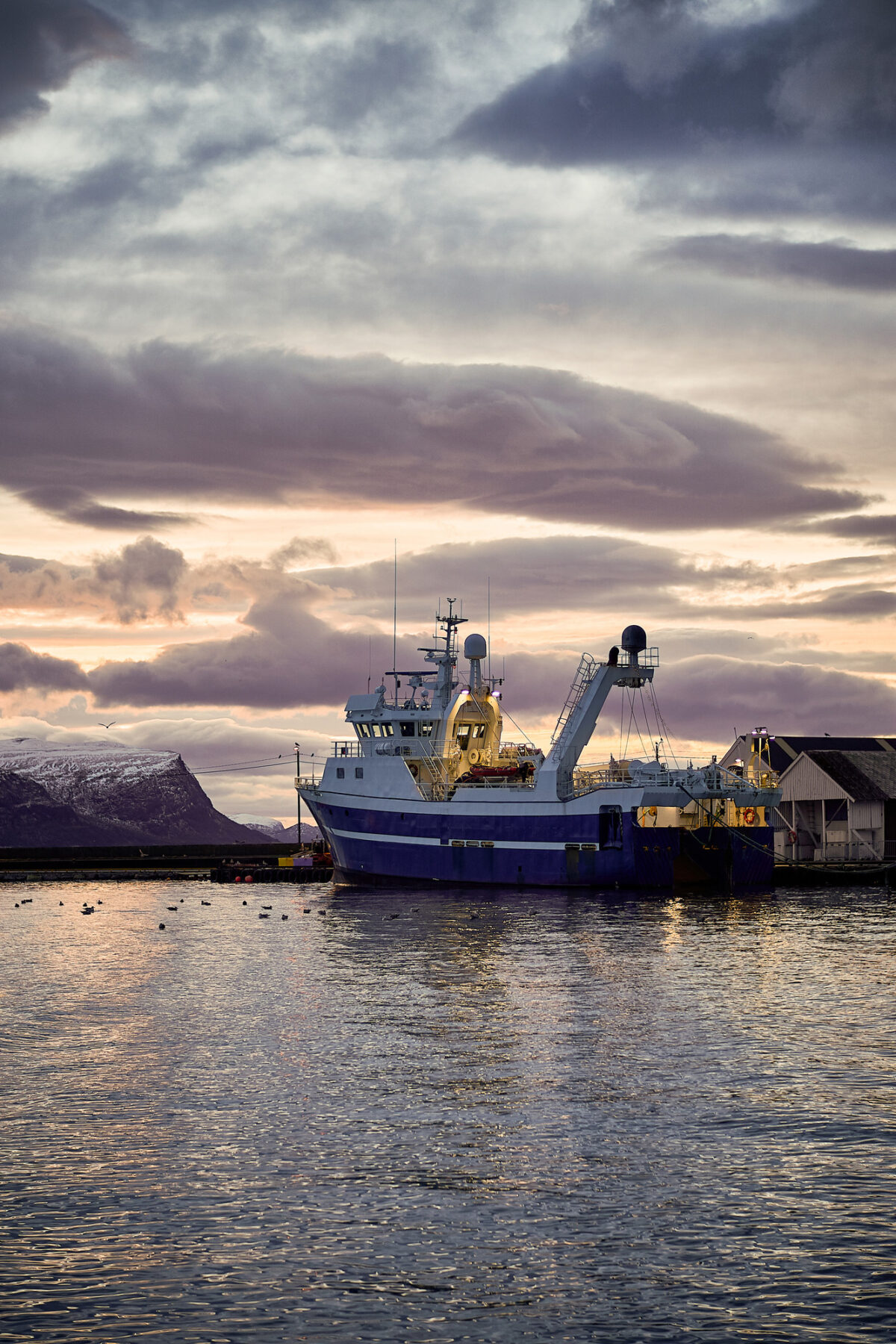
2007: Major seafood buyers, including SFP partners McDonald’s, High Liner Foods, and others, establish the Barents Sea cod and haddock fishery improvement project (FIP). SFP is involved in the initial scoping and initiation phase of the project, then provides technical and analytical advice to the market. The FIP’s objectives include scientifically determined quotas, reducing environmental impacts, preventing expansion into pristine Arctic habitats, tracking and monitoring IUU fishing, and using control documents.
2007: The North-East Atlantic Fisheries Commission adopts port-state measures.
2008: The European Union introduces its “yellow card/red card” system for preventing, deterring, and eliminating IUU fishing. Illegal over-quota catches drop to 34,000 tons (8% above quota)
2009: The JRNFC allows for joint inspections. Illegal over-quota catches are negligible.
2010: Both the cod and haddock fisheries are awarded MSC certification. FIP participants agree to continue supporting their goals and a continued stakeholder consultation process.
2011: MSC conditions related to stock status and harvest control rules are deemed on target and are closed. Conditions related to environmental impact and governance and management of the fishery are also deemed on target but remain open.
2012: Following on the MSC certifications, the Barents Sea Cod and Haddock FIP is declared “completed” and the participants disband.
The fishery begins to recover
2013: Barents Sea cod spawning biomass achieves a record high of 2.1 million tonnes. The JNRFC sets a recordhigh quota of 1 million tonnes, and annual catches total 966,000 tonnes, a 34% increase from 2012.
2015: SFP releases its 2014 Whitefish Fisheries Sustainability Overview reviewing the sustainability status of the world’s wild-capture whitefish fisheries. Recommendations for the Barents Sea cod fishery include closing coral areas to bottom trawling, reducing bycatch, increasing observer coverage and vessel monitoring, and advocating to the Norwegian and Russian governments for an improved benthic management strategy.
2016: In an agreement brokered by Greenpeace, an industry-wide coalition of companies voluntarily commits to avoid purchasing fish caught in vulnerable areas of the Barents and Norwegian seas, as part of a proactive agreement to protect fragile Arctic marine habitats.
2019: Work by this industry coalition contributes to establishing a new Norwegian fisheries regulation in the northern Barents Sea, permanently protecting ten areas from fishing and limiting bottom trawling in previously unfished areas around Svalbard.
Declining stock status
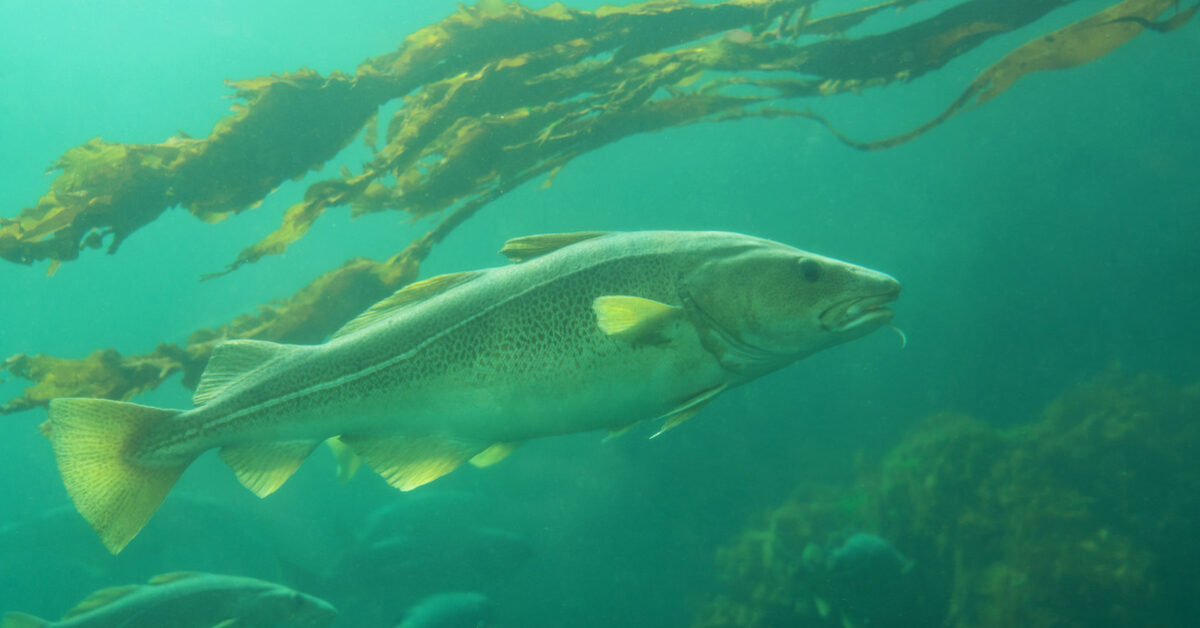
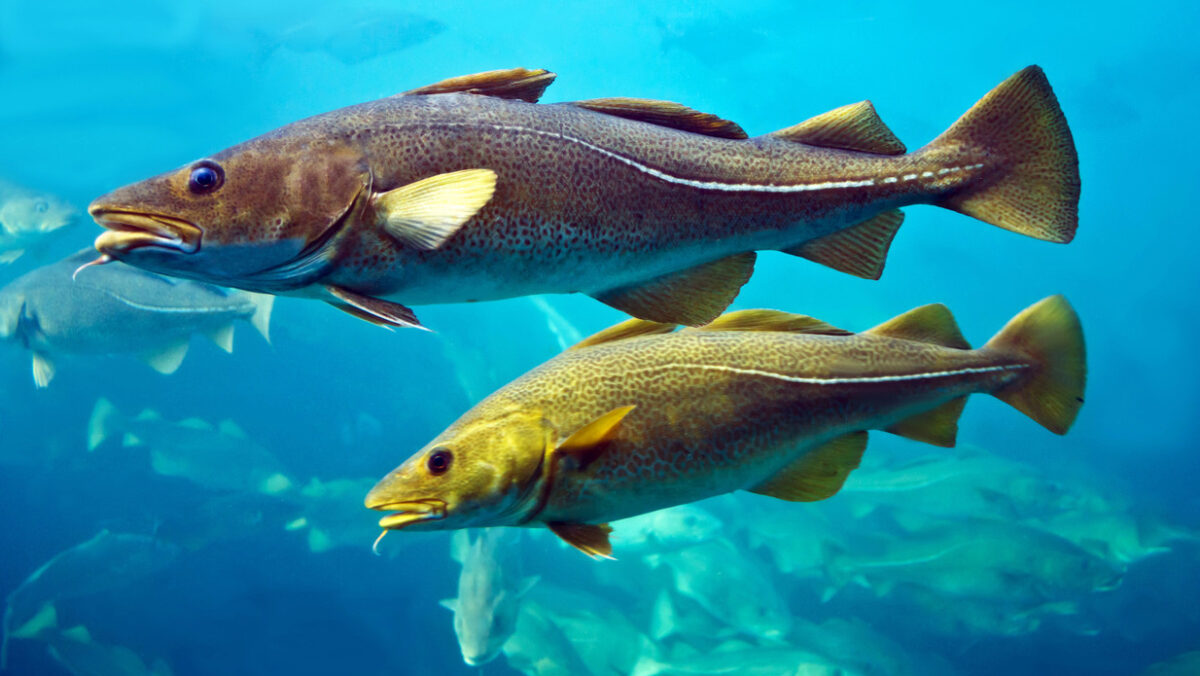
From its all-time high in 2013, the biomass levels in the Barents Sea cod fishery entered more than a decade of decline, reducing catch levels and threatening the viability of the fishery.
2021-2025: Responding to declining biomass levels in the fishery, the JNRFC reduces allowable catches from 885,000 tonnes in 2021 to 340,000 tonnes in 2025, due to continued decreases in the spawning population in the fishery. However the cuts are smaller than levels recommended by scientists because they are capped by management authorities and cannot be reduced below a certain level.
2025: A stock assessment shows that biomass levels have dropped 85% below the 2013 peak, and also below the precautionary target reference point. Data indicates that the stock will continue to drop for the next few years before potentially stabilizing – but only with the right management actions.
2026: The JNRFC sets the Barents Sea cod quota at 285,000 tonnes for 2026. While this is a 16% reduction from 2025, it is still above scientific advice – which was for a 21% cut from 2025 – and could potentially threaten the fishery’s certification status.
The need for revived engagement
While initial industry engagement in the fishery was remarkably successful, the story of the Barents Sea cod fishery demonstrates the importance of staying engaged and continuously monitoring a fishery. Instead of a timebound effort with a single target, a fishery improvement project (FIP) should be a long-term collaborative effort to support better management and governance in a fishery.
The industry-led FIP met its goals of rebuilding the cod stocks, but it was seen by participants as a short-term effort to get the fishery to certification. Once that goal was achieved, the FIP was disbanded and attention turned elsewhere. And then when problems arose several years later, the infrastructure of the FIP was gone and there was no formal mechanism for stakeholders to reengage. Further, because the fishery was already MSC-certified, it was not seen as a “problem” fishery and thus did not receive the attention it needed to keep targets on track.
Today, in 2026, the Barents Sea cod fishery faces significant challenges that could impact available supplies, vulnerable ocean wildlife, and ultimately its MSC certification. A committed group of industry, government, and NGO stakeholders saved this fishery once before – it may now be time to do it again.
Other challenges facing the fishery
Bycatch of golden redfish: Of the two species of redfish taken as bycatch in the Barents Sea cod and haddock fishery, one (beaked redfish) is in good shape while the other (golden redfish) has been classified as Endangered since 2010. The two species are very hard to tell apart visually and are not differentiated during trade, meaning that companies sourcing redfish from the Barents Sea may be unintentionally trading an Endangered species.
Impacts on sponge fields: Another ecosystem risk from the cod fleet is the removal of sponges from the sea floor by bottom trawls. These complex sea bottom habitats support high biodiversity and ecosystem functions and their damage or destruction by trawl gear reduces ecosystem health. While spatial management measures and industry practices are designed to avoid these vulnerable habitats, it is known that management measures are not as effective as previously thought.
Growing IUU risks: Increasing concerns around overfishing, misreporting, and mislabeling in the fishery are creating additional uncertainties about whether proposed harvest levels are sufficiently precautionary.