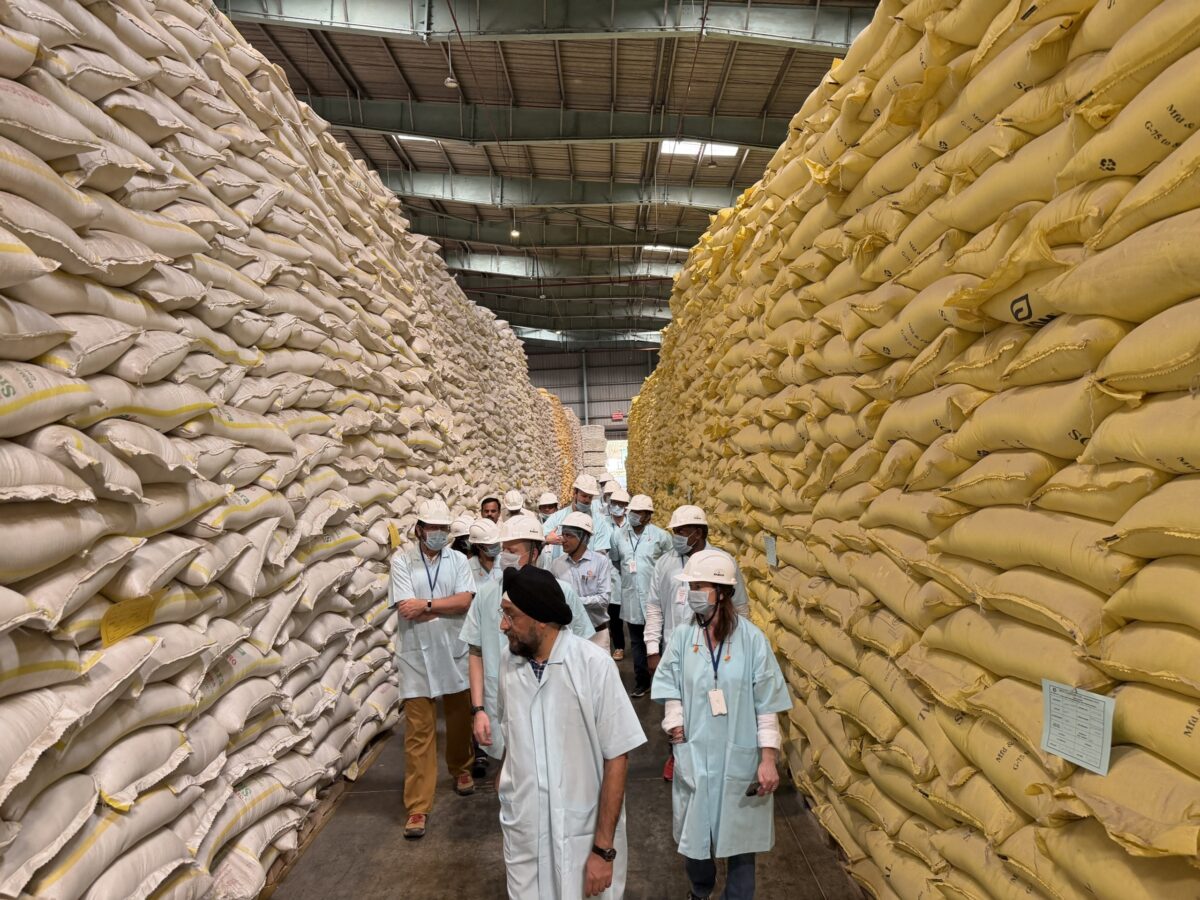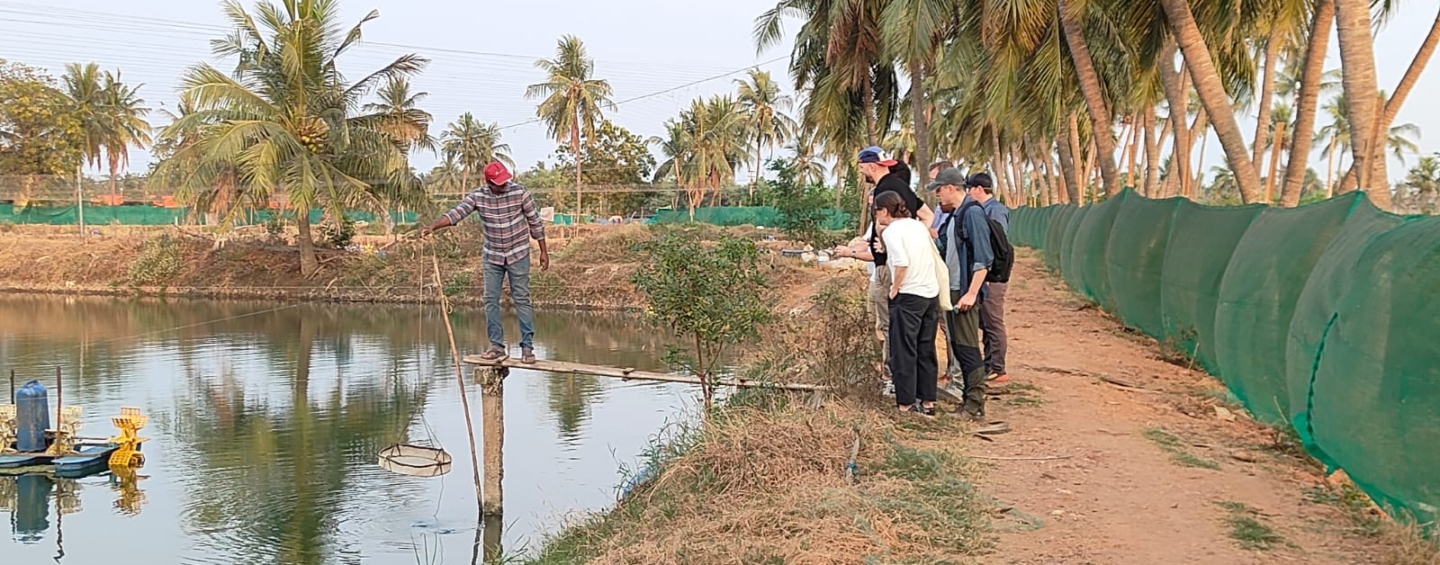
In February, I had the opportunity to join the ASC–SFP India Shrimp Landscape Tour in Andhra Pradesh, a visit that deepened my understanding of both the complexity and the potential of what we are collectively trying to build here. SFP and ASC (the Aquaculture Stewardship Council) have been collaborating with local stakeholders in this region of India for more than two years, developing a model for a landscape-level approach to aquaculture.
Andhra Pradesh is not a marginal case study. The state produces nearly 1 million tonnes of shrimp annually, primarily through smallholder farms, and shrimp farming employs 4 million people while contributing around 10% to the state’s GDP. It is, in many respects, the center of gravity for the global shrimp supply, and the scale of the sector is matched by the scale of its challenges: water quality degradation, feed sourcing pressures, habitat impacts, and labor conditions that demand serious, sustained attention.
The clear case for a landscape approach
What this visit reinforced, more clearly than any desk-based analysis could, is that the case for a landscape approach is not theoretical, it is visible in the field. The difference between certified and non-certified farms is evident in the structure of management systems, the level of control applied, and the culture of record-keeping and accountability that certification tends to build over time. But those differences, however meaningful, do not exist in a vacuum. The water flowing between farms, the feed mills supplying dozens of producers, the processing plants aggregating harvests from across a region – these are shared systems, and they shape outcomes at every individual site within them.
Through our work at SFP alongside ASC, we are advancing a model that connects farm-level improvements to broader regional outcomes, raising the environmental and social baseline across shared geographic areas — not by replacing certification or independent projects, but by building on them. Seeing hatcheries, farms, feed mills, processing plants, and surrounding ecosystems in sequence, rather than in isolation, gives you an appreciation for the interdependencies that a conventional supply chain audit struggles to fully capture. It also gives you a clearer sense of where the leverage points are: the actors, relationships, and infrastructure that, if aligned, could shift outcomes at scale.
Translating intent into action
Andhra Pradesh’s stated ambition to increase its aquaculture area from 400,000 to 1 million acres by 2030 will bring rapid growth, and with it, increased pressure on ecosystems, water resources, and local communities. That trajectory makes the work more urgent. But it also makes it more tractable, because the institutions, the local expertise, and the relationships needed to drive change are already present and, in many cases, already engaged. The question is less whether change is possible and more whether the conditions for coordinated, system-level action can be put in place quickly enough to get ahead of the growth curve.
That is what I find most encouraging about where things stand. Not that the challenges are smaller than I expected (they are not) but that the foundations for something more systemic are increasingly in place. There is genuine appetite among producers, local organizations, and government actors to move beyond fragmented, project-by-project progress. Translating that appetite into aligned action is the work ahead.
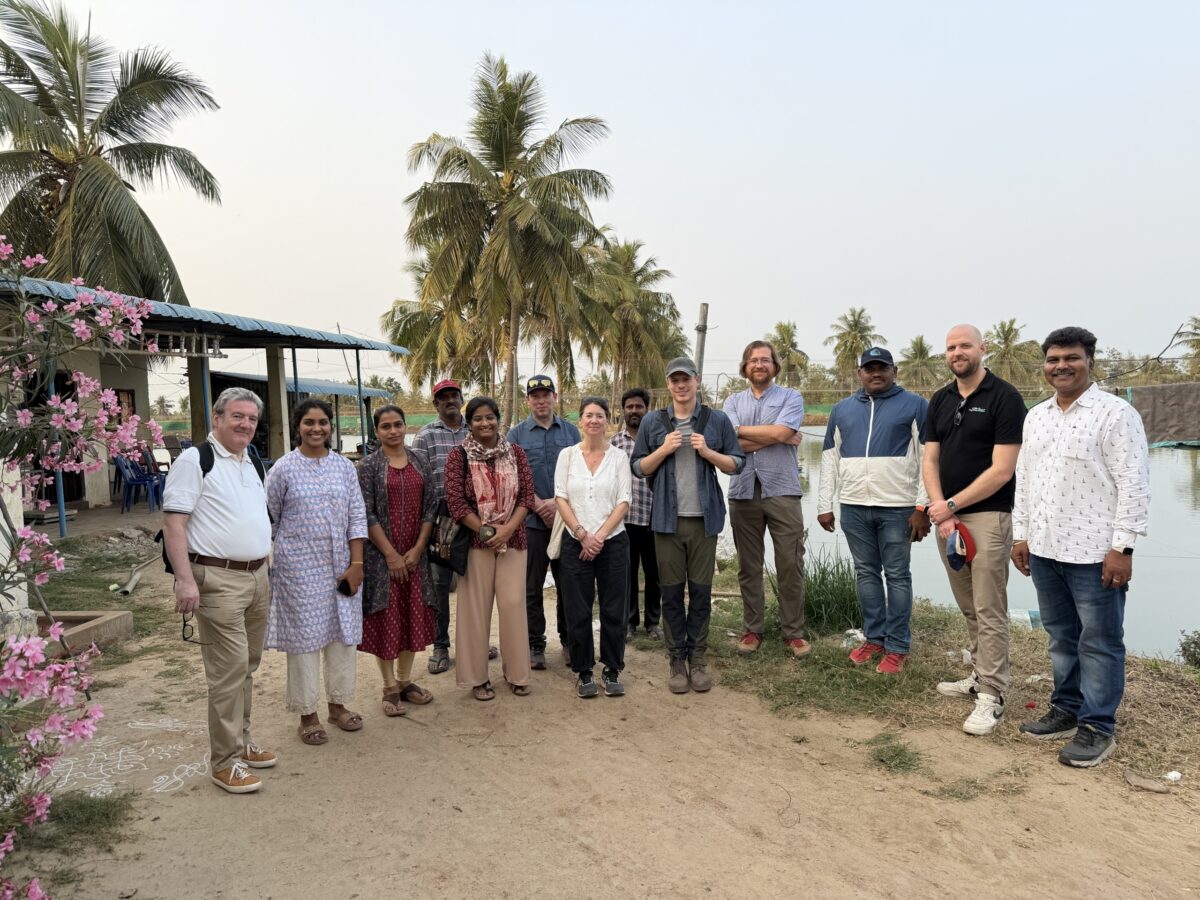
David (5th from right) with his fellow participants in the India Shrimp Landscape Tour