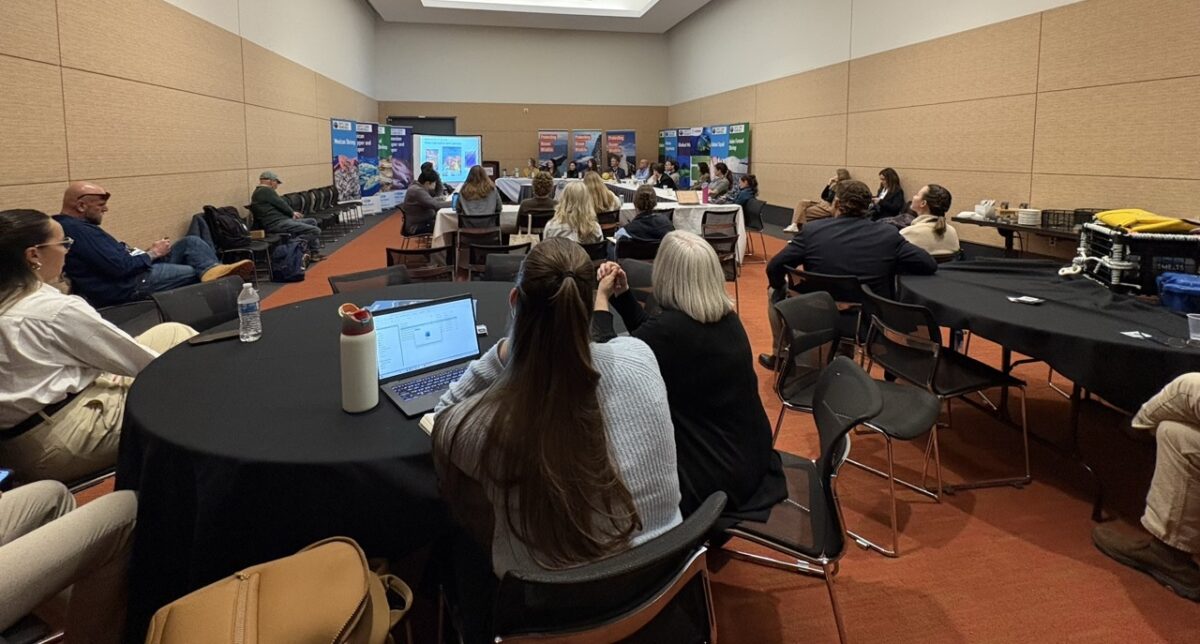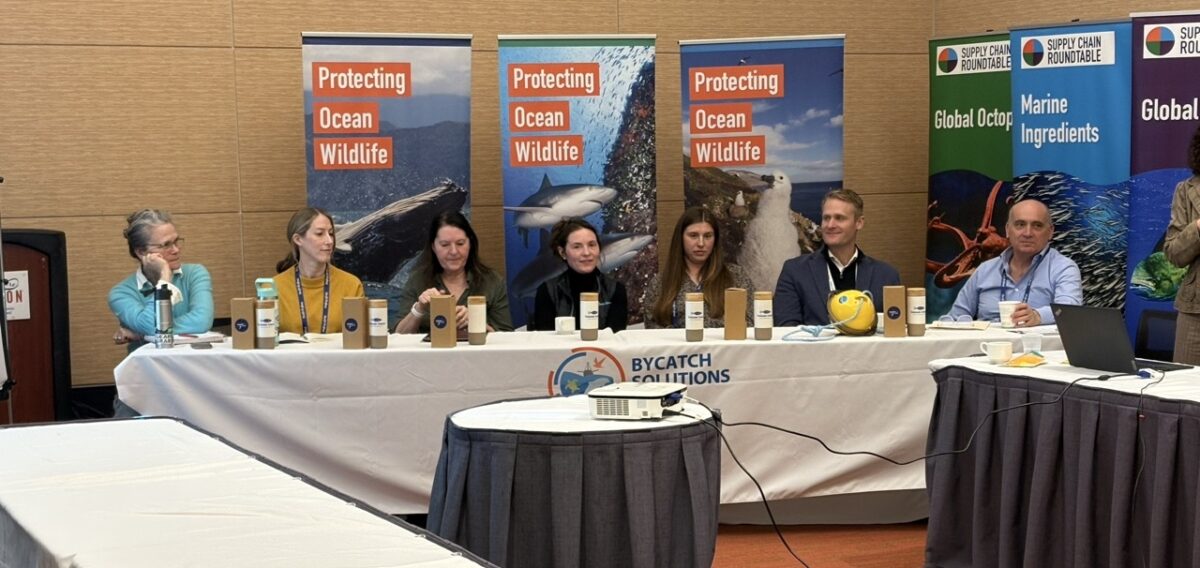
(L-R) Laura Ludwig, Center for Coastal Studies; Francine Kershaw, Natural Resources Defense Council; Susan Inglis, Commercial Fisheries Research Foundation; Emma Weed, Gulf of Maine Lobster Foundation; Caitlin Townsend, Net Your Problem; Ryan Lind, Blue Ocean Gear; Michael Cohen, International Seafood Sustainability Foundation
Addressing the problem of ghost gear (lost or abandoned fishing gear) can reduce risks to wildlife and ecosystems and also provide important economic benefits to fishers, “Ghost Gear: Protecting Ocean Health and Seafood Supply Chain” panelists said.
“When we lose gear, we are losing a lot of money,” said Caitlin Townsend, a third-generation commercial fisher from Maine. “It affects our ability to land lobster and to run a sustainable business.”
Ryan Lind, of Blue Ocean Gear, said that if fishers can more effectively track their gear with innovative technologies such as Smart Buoys, they are less likely to use it, saving them time, money, and fuel looking for lost gear and reducing ghost gear.
Multiple panelists, including Susan Inglis of the Commercial Fisheries Research Foundation (CFRF) and Laura Ludwig of the Center for Coastal Studies, described how they work closely with communities, state and local officials, and – most importantly – fishers to find and remove derelict gear quickly and safely. CFRF first got into ghost gear removal “because fishermen came to us and said there’s a huge problem, please help us,” Inglis said.
In addition to fishing, Townsend also works with Net Your Problem, which works with the fishing community to locate, collect, and safely dispose of and recycle old gear. The most important part of it is the connection to the fishermen. “Giving a second life to gear that gave so much to the fishermen” is very important, she said.
Emma Weed, of the Gulf of Maine Lobster Foundation, described their approach as very “fishermen and community forward.” Fishermen are “the salt of the Earth and the best for the job” as they have the skills and the equipment to find and retrieve lost gear, and they know where it is, she said. They also have a strong interest in getting old gear off the ocean floor. In some areas of the Gulf of Maine, Weed said, there can be piles of old gear “10-20 traps deep,” which makes it impossible for fishermen to fish those areas.
Besides the cost, which all panelists said was the biggest obstacle to ghost gear removal, another challenge is state regulations. In several states, it is illegal for fishermen to have someone else’s gear on their boats, so if they pull up lost or broken gear that is not theirs, they have to throw it back. While those regulations were set to protect fishers and their gear, there are better ways to do that, Ludwig said. “There will always be good guys and bad guys. But what you can do is change the regulations for anyone who wants to do the right thing, to ease the burden of responsible handling of the gear.”
Advocates have successfully campaigned to get such laws changed in Massachusetts and would now like to see change in other states. It is helpful for fishers and the seafood industry to engage in those conversations to make sure the language works for everyone, the panelists noted.
Better educating industry is also important in encouraging ghost gear removal. Michael Cohen of the International Seafood Sustainability Foundation, noted that a key part of encouraging adoption of biodegradable “jelly FADs” was engaging with regulators, retailers, and suppliers to demonstrate that the technology has been tested and proven in all the oceans. Francine Kershaw, of the Natural Resources Defense Council, described the “incredible knowledge exchange between fishermen using on-demand gear in different regions.”
It is important to destigmatize ghost gear and “make it something we can talk about,” Weed said. “We need to let fishermen know they will not have fingers pointed at them and that they can become part of the solutions.”
Another way to promote – and fund – ghost gear removal is to use it as a selling point, panelists said. “We need to make the connection between people who eat seafood and this problem,” Ludwig said. “All seafood is caught somehow. The reason there is ghost gear is because people eat seafood.”
Townsend said that she uses ghost gear removal as part of her direct marketing business. “We tell our customers that we recycle old gear at the end of every season. People love that.”