SFP Fisheries Governance & Livelihoods Director Pedro Ferreiro moderated a panel discussion on industry leadership in small-scale fisheries (SSF) at Seafood Expo Global 2026 in Barcelona. The panel discussed a number of key points, including:
- Empowered SSF actors make compliance and sustainability feasible: When small-scale fishers and vessel owners are empowered to participate in decision making, provided with the necessary organizational and technical support, and granted direct communication channels with markets, advancing governance and delivering evidence for market requirements becomes entirely achievable.
- Fisheries governance is a shared supply chain responsibility, not just a matter for fishers and policy makers: Effective management is not a burden to be carried solely by those at the source or by governments. The industry must recognize its role in enabling governance by co-investing in the “public goods” that make it work, such as data systems, monitoring, and strengthening producer organizations.
- Moving from “demanding” to “enabling”: To meet new regulatory standards (like the EU Due Diligence Regulation or the EU Green Washing Directive), the industry must transition from simply setting requirements to actively creating the conditions for success. This means moving away from a transactional model toward long-term partnerships that support the operational reality on the water.
- Producer leadership is the engine of change: The leadership shown by organized platforms like ASOAMAN and COREMAHI in the South Pacific proves that producers are ready to lead. By bringing their own data and science to regional forums (like the IATTC), they have transformed from “passive suppliers” into legitimate governance partners.
- Market integrity – Prioritizing real action over “Paper FIPs”: The session highlighted a critical call to action for buyers: prioritize traceability and work with organized groups to ensure that sustainability claims are backed by real progress on the vessels, avoiding “paper-only” initiatives that lack connection to the fishing communities.
As Ferreiro noted in the session, “The role of the seafood industry is not just to set the bar high, but to help build the ladder so that small-scale fisheries, the backbone of our global supply, can reach it.”
Panelists included:
- Alejandro Castro, Sustainability Manager, Profand Group
- Francisco Javier Alarcón Holguín, Vessel Owner, ASOAMAN
- Dave Parker, Head of Fisheries and Aquaculture, Sainsbury’s Supermarkets
- George Pinto, President, ASOAMAN
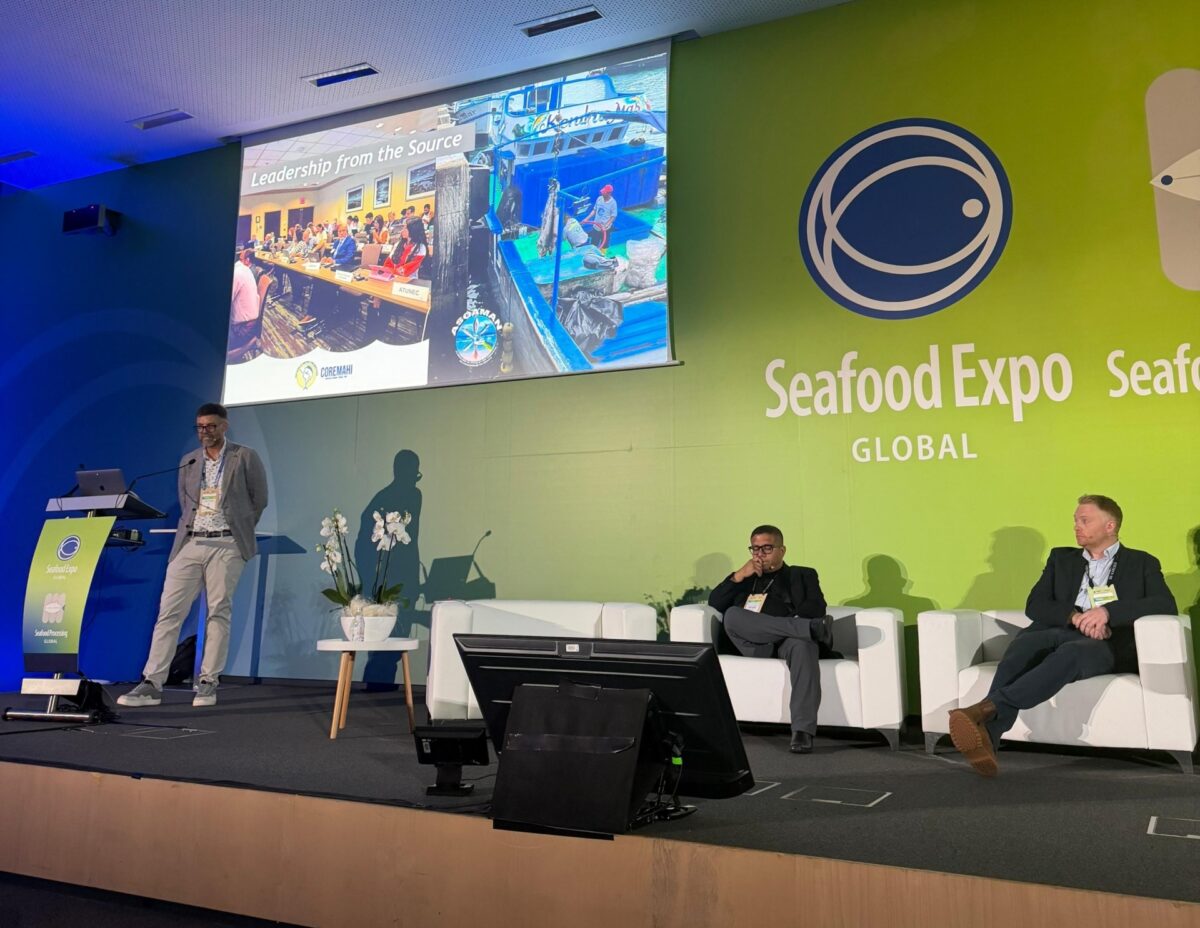
(L-R) Pedro Ferreiro, Francisco Javier Alarcón Holguín, and Dave Parker
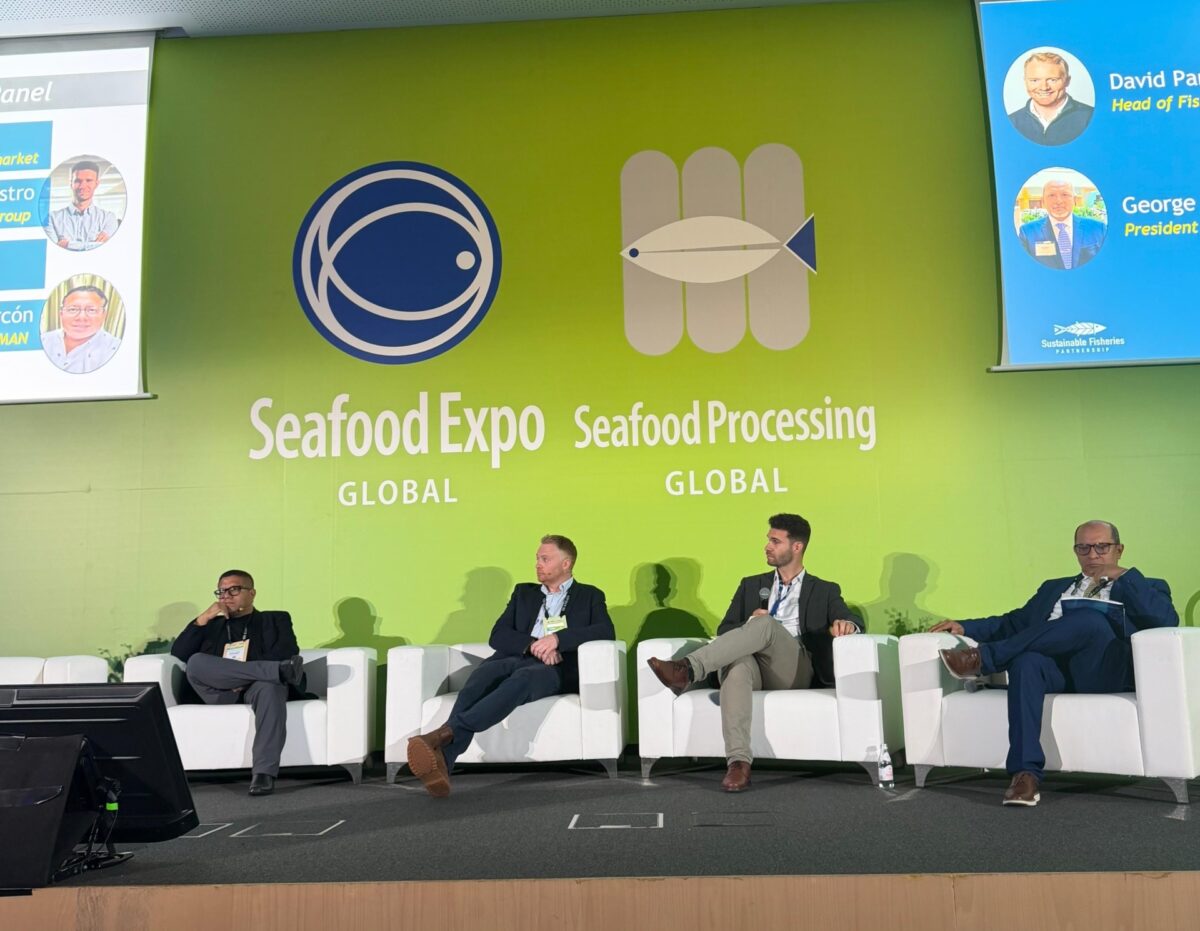
(L-R) Francisco Javier Alarcón Holguín, Dave Parker, Alejandro Castro, and George Pinto