
Impact Stories
Patience and partnership overcome skepticism to transform Ecuador’s small pelagics fishery
Despite challenging conditions, a combination of governance strengthening, scientific guidance, and industry leadership has produced real, measurable improvements in a vital Ecuadorian fishery.
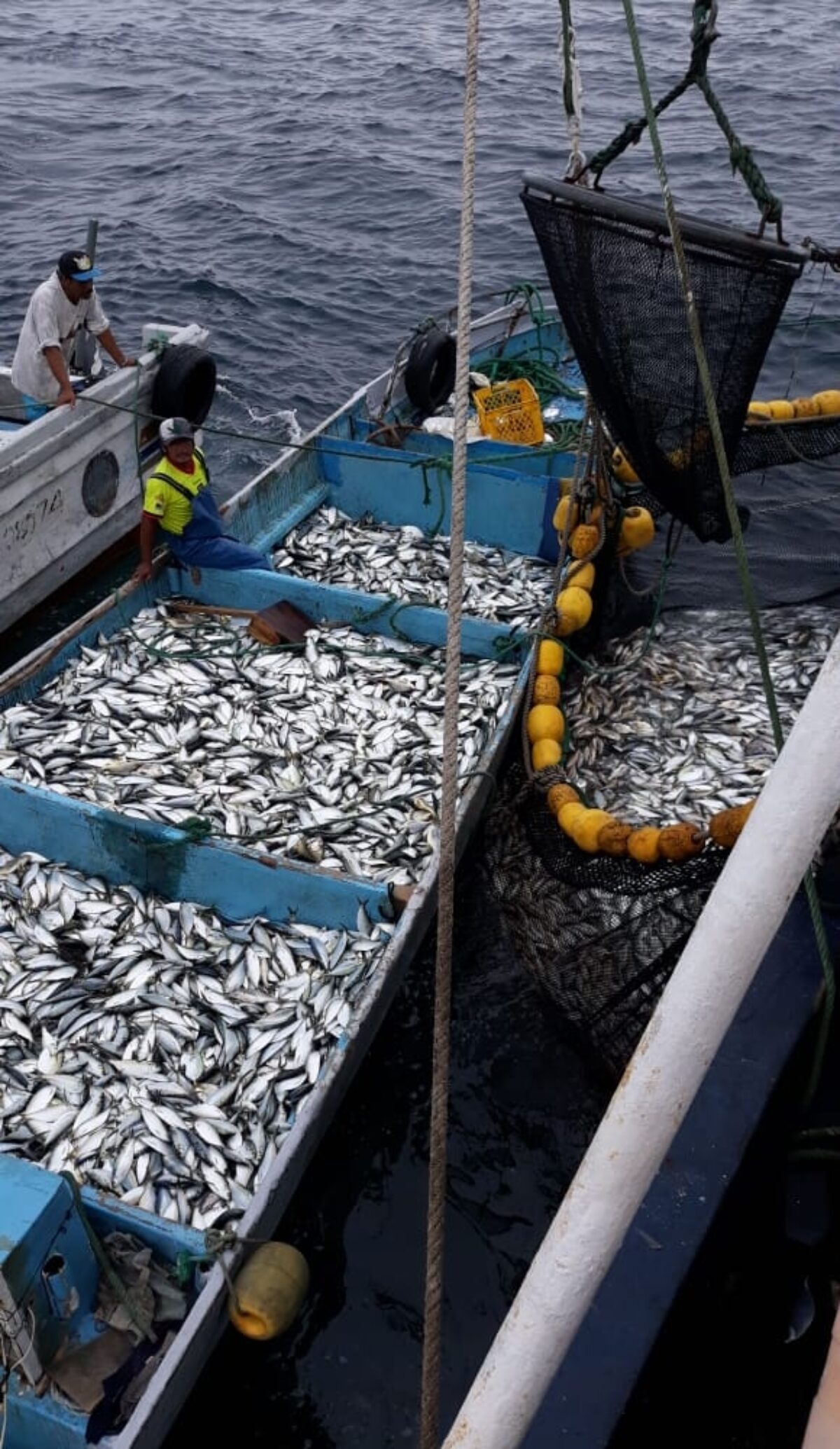
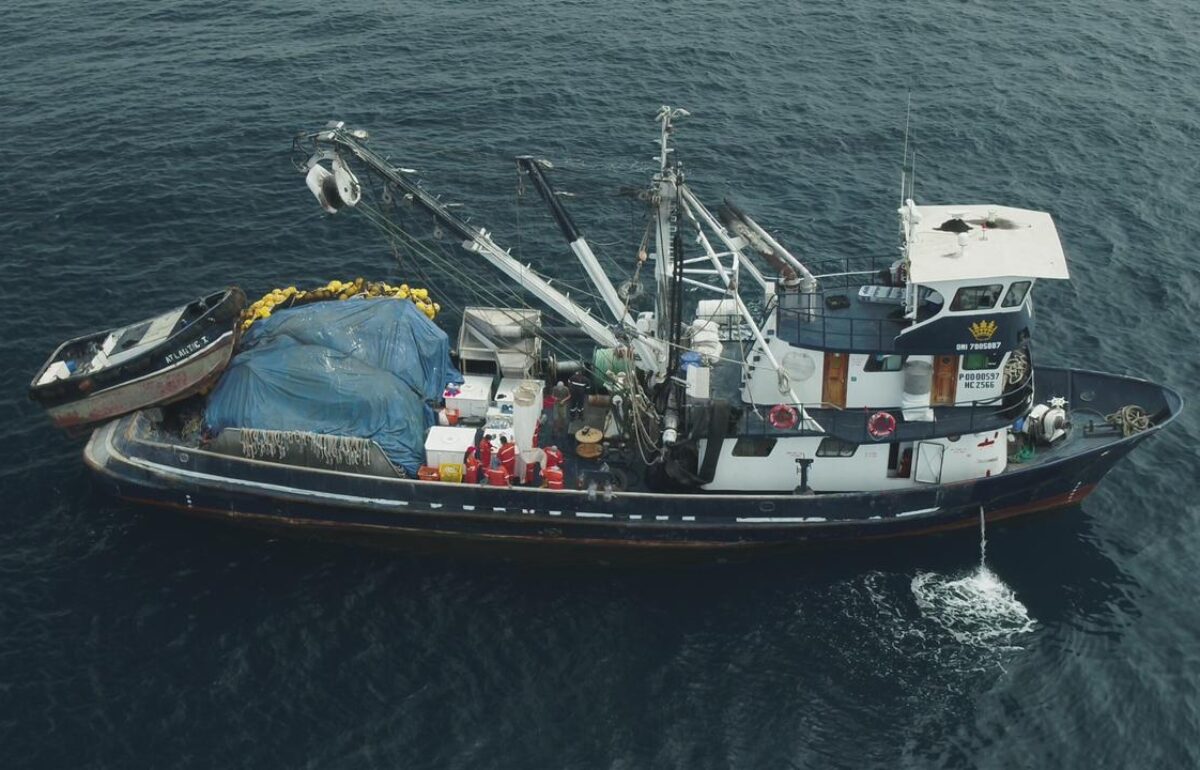
The small pelagics fishery is the second-most-important fishery in Ecuador (after purse seine tuna), with an industrial fleet of 267 vessels and an estimated annual catch of 278,000 tonnes, supporting 250,000 jobs. The fishery, which produces canned fish, frozen fish, and marine ingredients, includes species such as chub mackerel, thread herring, and frigate tuna that are mostly used for fish feed.
Since 2017, SFP has collaborated with Ecuadorian government and industry stakeholders to help improve the small pelagics fishery. This collaboration began with five years of intense engagement that laid the foundations for an industry-led project designed to be sustainable over time and capable of achieving its long-term objectives. After this initial phase, SFP’s role shifted to providing limited, light-touch support – primarily through occasional recommendations and advisory input – while the leadership and implementation of the work rested firmly with industry stakeholders.
A timeline of progress in the Ecuador small pelagics fishery
Mobilizing market support and seed funding to enable improvements
2016: SFP launches the Latin American Reduction Fisheries Supply Chain Roundtable (SR) to bring together key suppliers and buyers of reduction fisheries, with the aim of promoting sustainability through pre-competitive collaboration and support for fishery improvement projects (FIPs). Within this framework, Ecuador’s small pelagics fishery is identified as a priority. SFP provides FIP training to Ecuador’s National Chamber of Fisheries (CNP) and fishmeal processors, strengthening collaboration across the supply chain and helping shift buyer pressure into coordinated market support for the producing and processing sector.
2017: The Global Marine Commodities (GMC) project is launched to promote sustainability in seafood supply chains through pre-competitive tools such as FIPs. The GMC project is an interregional initiative implemented by the governments of Costa Rica, Ecuador, Indonesia, and the Philippines. GMC is funded by the Global Environment Facility, with technical support from the United National Development Programme (UNDP), and is facilitated by SFP.
To address priority needs, the Project Steering Committee includes Ecuador’s small pelagics fishery as a focus fishery, securing government backing and conditional industry support. SFP leads a pre-FIP phase, co-funded with industry, that establishes industry leadership, governance structures, and a clear workplan to advance the FIP process. A shared-cost model is used to reinforce the principle that philanthropic funds should be complementary to industry-led efforts, rather than a substitute.
Tackling an “impossible” task
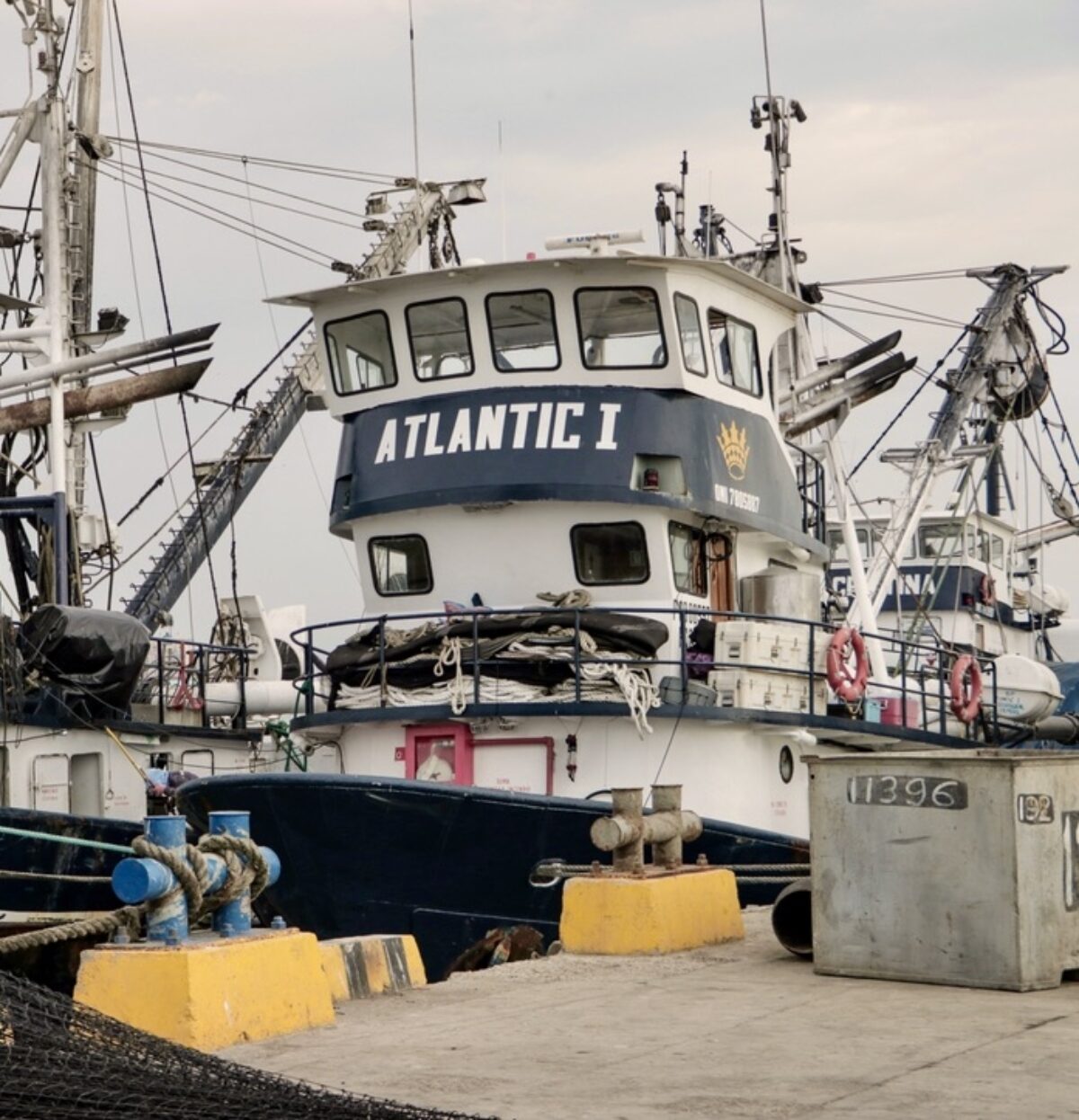
2018: SFP plays an important foundational role in transforming intent into a structured improvement process. Under a formal technical support agreement with the CNP, SFP coordinates the MarinTrust pre-assessment of the fishery, co-finances its execution, and actively mediates discussions among consultants, industry actors, and the National Fisheries Institute (INP). This mediation proves critical in resolving methodological disagreements, validating data, and building consensus around the assessment results. Based on this shared diagnostic, SFP guides stakeholders in defining the scope of the FIP, advising on participant selection and reinforcing the strategic decision to focus on fishmeal and aquaculture feed actors whose market incentives are closely aligned with certification objectives.
2018: SFP is instrumental in developing the Fishery Action Plan (FAP), translating the pre-assessment findings into a detailed, budgeted, and time-bound roadmap for improvement. SFP invests significant effort in socializing the FAP with industry participants by facilitating in-depth discussions on objectives, responsibilities, budgets, and risks. This process is fundamental in building trust and enabling industry actors to commit to financing the FIP. With SFP’s guidance, stakeholders negotiate and sign a Memorandum of Understanding that establishes governance structures, funding mechanisms, and safeguards for investment, ensuring transparency and long-term commitment.
October 2018: The Ecuador Small Pelagics Sustainability Fishery Improvement Project (SPS-FIP) is established. The FIP is financed by a coalition of aquaculture feed producers and fishmeal processors in Ecuador’s CNP, with the support of the GMC project and technical assistance from SFP. These stakeholders come together in the face of significant skepticism. At the time of the FIP’s creation, 100% of the six small pelagic stocks in the region are overexploited and 50% are overfished (based on 2017 data). Some organizations argue that rebuilding a multi-species fishery with overexploited stocks would be impossible.
Science and collaborative management
2019: While the industry assumes operational leadership, SFP supports the SPS-FIP coordinator, facilitates cooperation agreements with government institutions, and helps align FIP activities with broader governance initiatives under the GMC framework. SFP also plays a key role in strengthening scientific capacity by supporting the design of stock assessments, advising on data collection systems, and facilitating access to international expertise. Additionally, SFP ensures compliance with MarinTrust Improver Programme requirements by supporting progress reporting and maintaining regular communication with certification bodies.
2020: The SPS-FIP adopts the Sustainable Marine Commodity Platform, which includes intersectoral decision making by government authorities, private sector actors, fishers, processors, and scientists. While the platform is formally led by government authorities and supported by UNDP under the GMC project, SFP acts as a technical mediator and connector between the platform and the Small Pelagics FIP, aligning the platform’s discussions and outputs with the FIP’s objectives, timelines, and technical requirements, to translate market-driven sustainability standards into actionable inputs for public governance processes. SFP also helps maintain continuity and coordination amid institutional instability, supports communication between platform and FIP coordinators, and reinforces the platform’s technical credibility, enabling it to function as an effective space for evidence-based, multi-stakeholder fisheries governance.
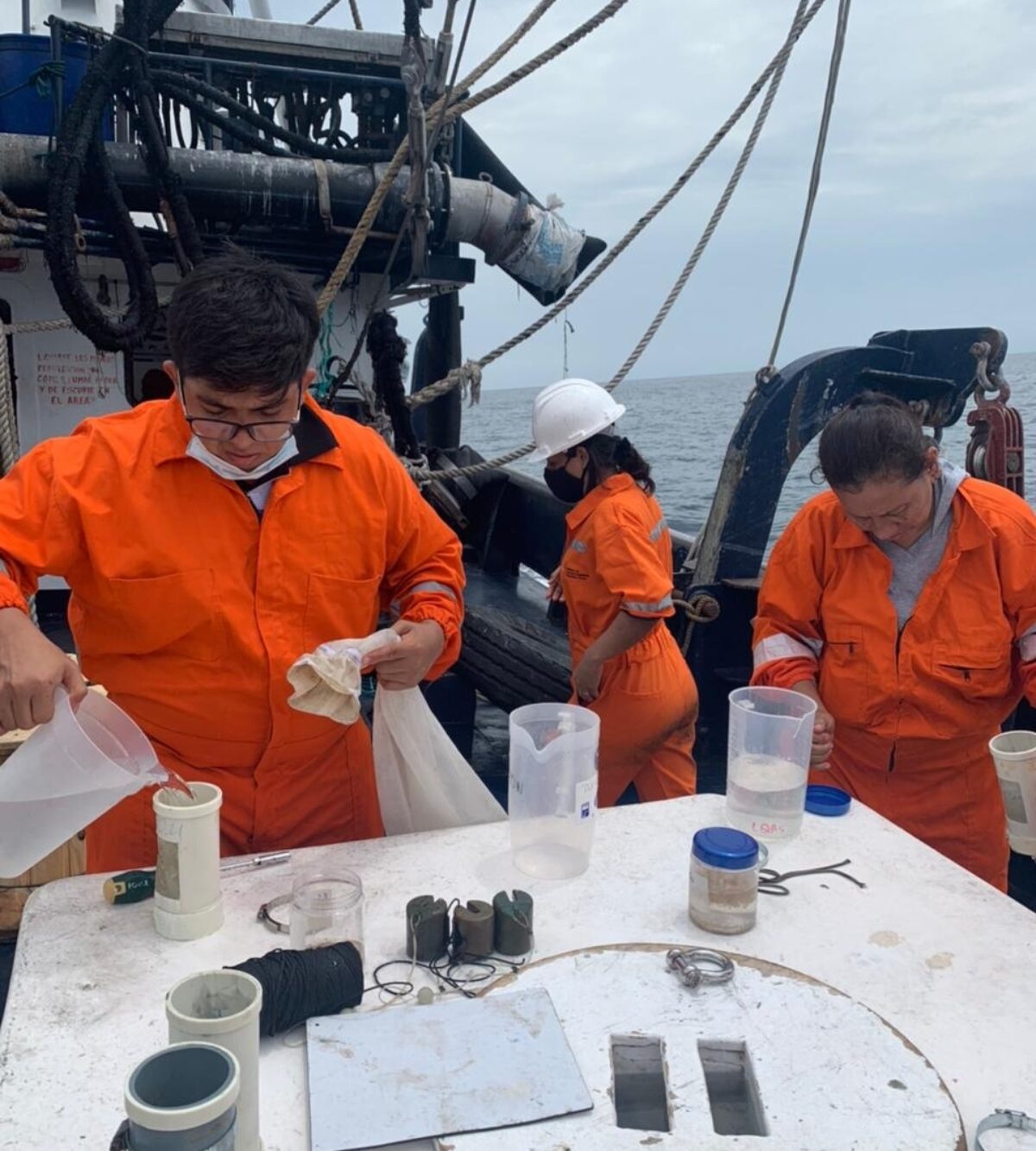
2020: SFP and the SPS-FIP provide support for improved stock assessment and evaluation to develop a Small Pelagic Fishery Action and Management Plan. Using 2019 data, the stock assessment shows that, of the six small pelagic stocks in the FIP, only 67% are now overexploited (down from 100% in 2018), and none are overfished.
A historic management plan
March 2021: Ecuador’s Undersecretariat of Fisheries Resources launches a new management plan for the small pelagics fishery, the first national-level fishery management plan with established objectives, goals, and management measures agreed upon by stakeholders through a participatory and inclusive decision-making process. The plan is the first to be approved under a stipulation in Ecuador’s new national fishing and aquaculture law that requires management plans to be developed for fisheries that are not regulated by regional fisheries management organizations (RFMOs). The adoption of the plan is a key step toward meeting the requirements of MarinTrust certification.
An industry-led sustainability transformation
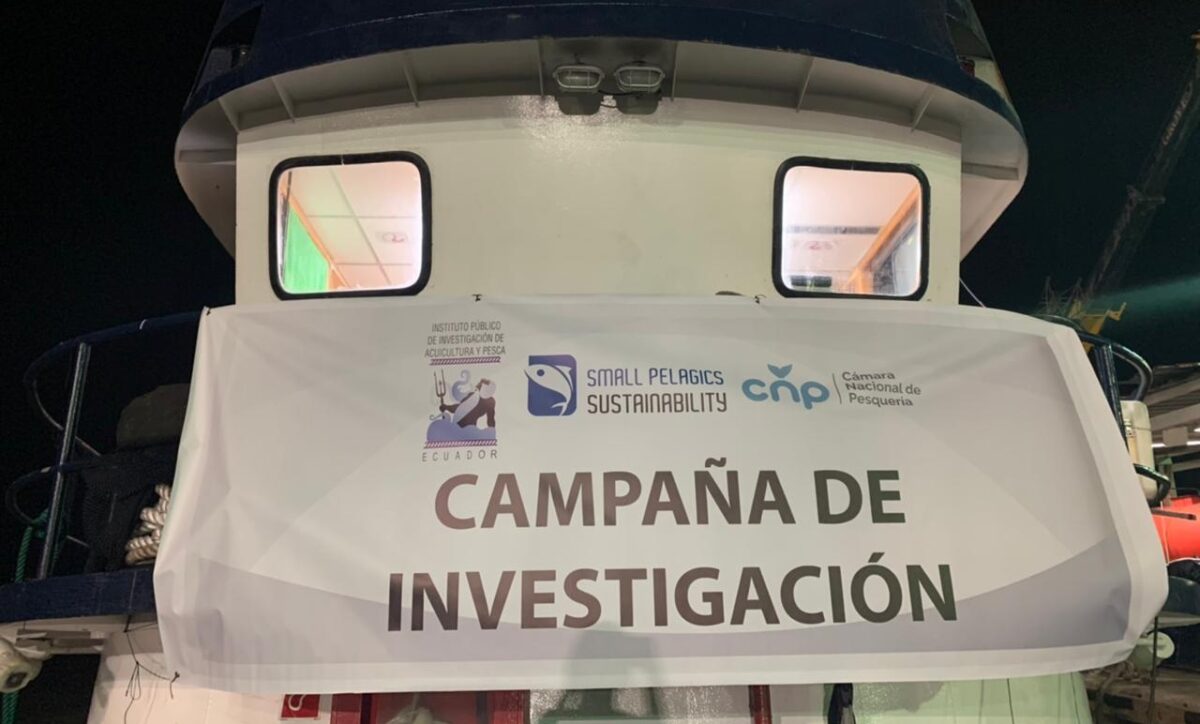
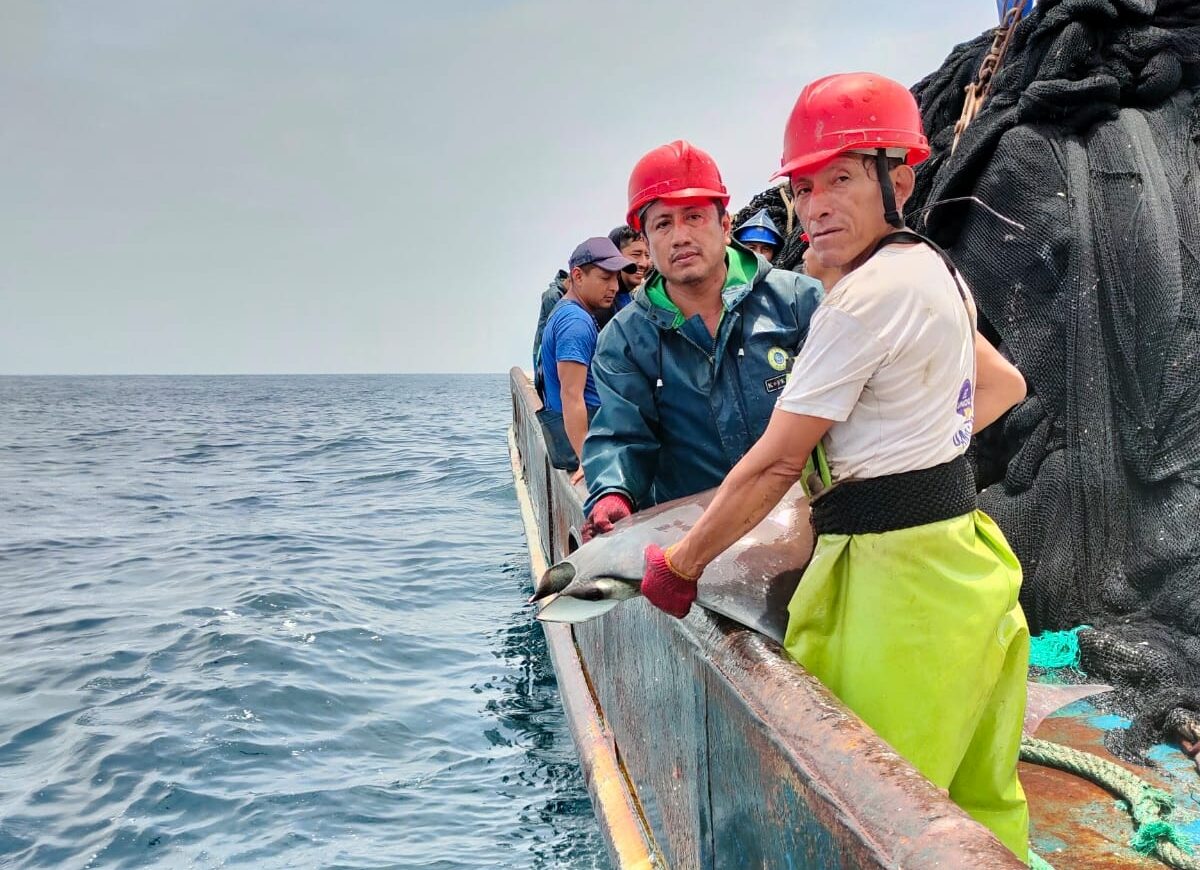
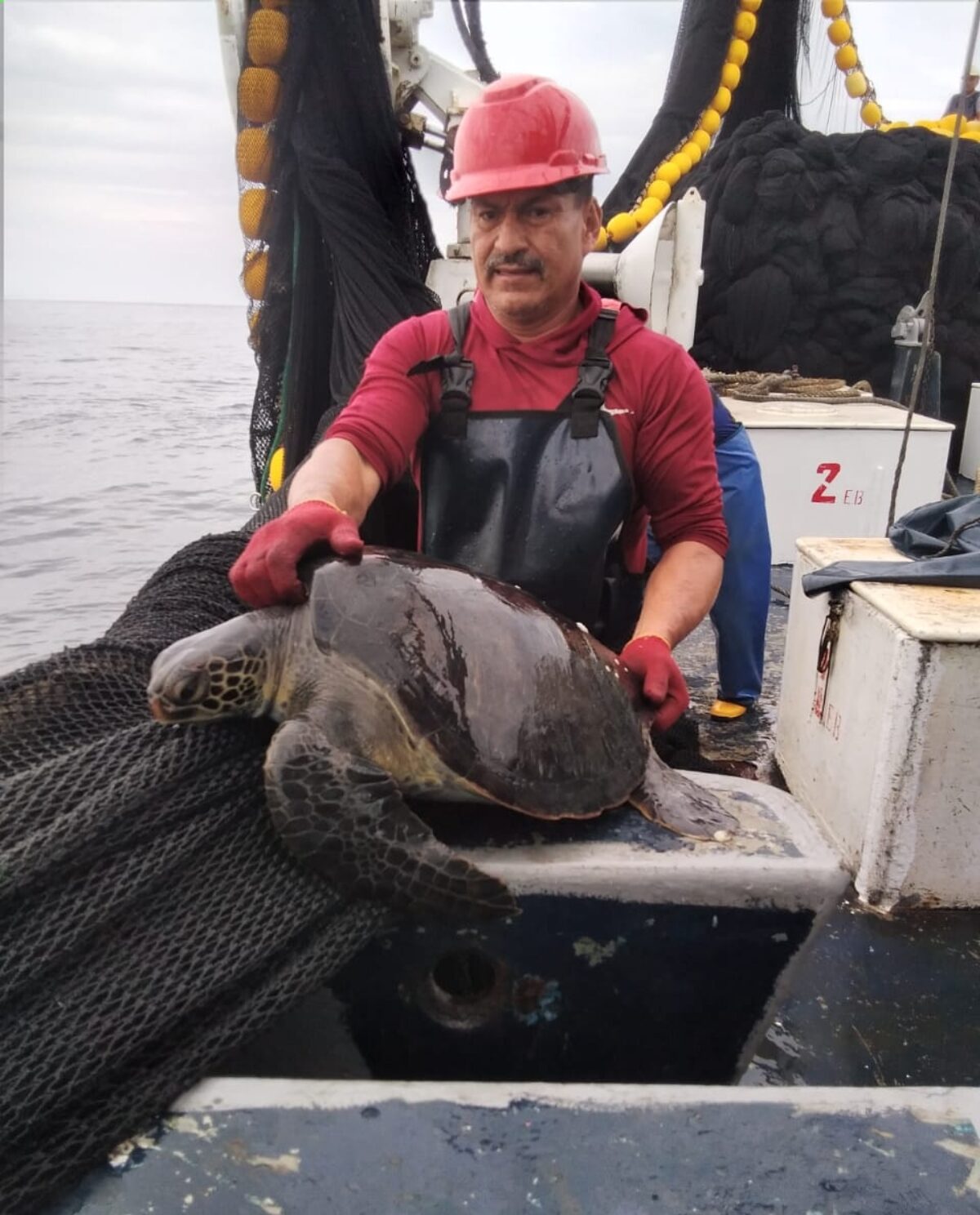
2021-2025: Under sustained industry leadership and with limited philanthropic support, the SPS-FIP in Ecuador consolidates its implementation through its own governance and institutionalized processes. During this period, the FIP strengthens monitoring and management systems through electronic logbooks, observer programs, the industry-led Responsible Fishing Programme, and extensive crew training. In addition, participatory monitoring generates high-quality data that informs management measures such as juvenile fishing bans and seasonal closures. Scientific progress is reinforced through peer-reviewed stock assessments and research cruises, confirming improved stock status, fishing mortality below FMSY, bycatch mitigation practices, and no significant ecosystem impacts under current management targets. In parallel, ecosystem-based and adaptive management is strengthened through reproductive and environmental monitoring, supporting biologically aligned closures. Throughout this period, SFP remains informed and available, providing occasional technical input upon request, although overall leadership and implementation is driven by industry stakeholders.
December 2025: After nearly seven years of collective effort, the SPS-FIP officially achieves MarinTrust certification, a monumental milestone for fisheries sustainability in Ecuador and a direct testament to the power of collaborative fisheries management.
“Transforming a fully overexploited fishery to meet MarinTrust certification standards was a long and demanding process, but it clearly shows that SFP’s approach works. Our model focuses on strengthening industry capacity so companies become the drivers of change, as primary beneficiaries who must be willing to invest in sustainability. This transformation is gradual, built through learning, trust, and engagement. Philanthropic funding played a key complementary role as seed capital, supporting early actions and incentivizing industry participation. Lasting impact comes from empowering those closest to the resource to lead its transformation.”
– Teddy Escarabay, SFP Latin American Fisheries Director
“Members of the SPS-FIP demonstrated that it is both possible and necessary to address sustainability challenges by joining efforts across the public and private sectors, even among competitors. When common challenges exist, the pursuit of shared solutions becomes a catalytic force capable of aligning wills, resources, and capacities for the collective good. The main challenge following this milestone is to sustain and strengthen it over time. In most developing countries, fiscal constraints represent a structural obstacle to meeting standards that are often designed with high-budget fisheries management models in mind. Without a resource management model like the one implemented by the SPS-FIP, this achievement would hardly have been possible. Looking ahead, the market must remain continuously engaged and assume responsibility for the sustainable origin of its products and raw materials – not only through sourcing requirements, but also by contributing to the resolution of the root causes of sustainability challenges, such as illegal fishing, and by recognizing the efforts made by fishers to harvest responsibly. These positive market incentives are what will enable initiatives like this one to be sustained and scaled over time.”
– Jimmy Anastacio, Fishery Improvement Project Manager, National Chamber of Fisheries
Related Links
All photos courtesy of the National Chamber of Fisheries.