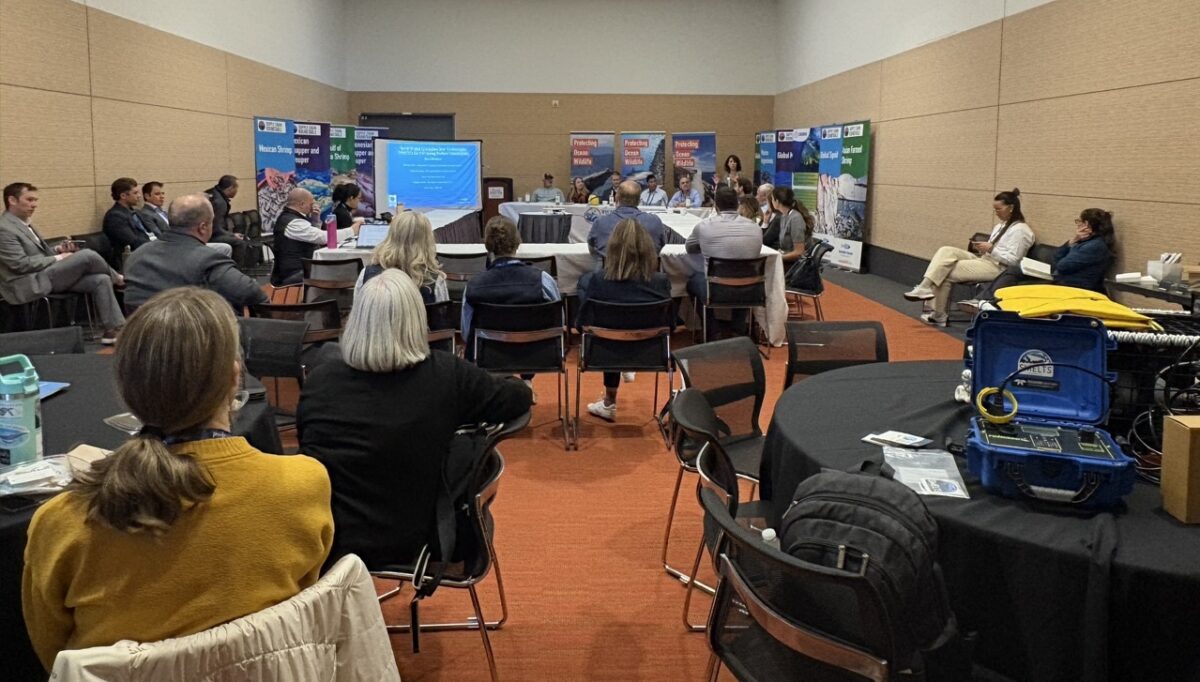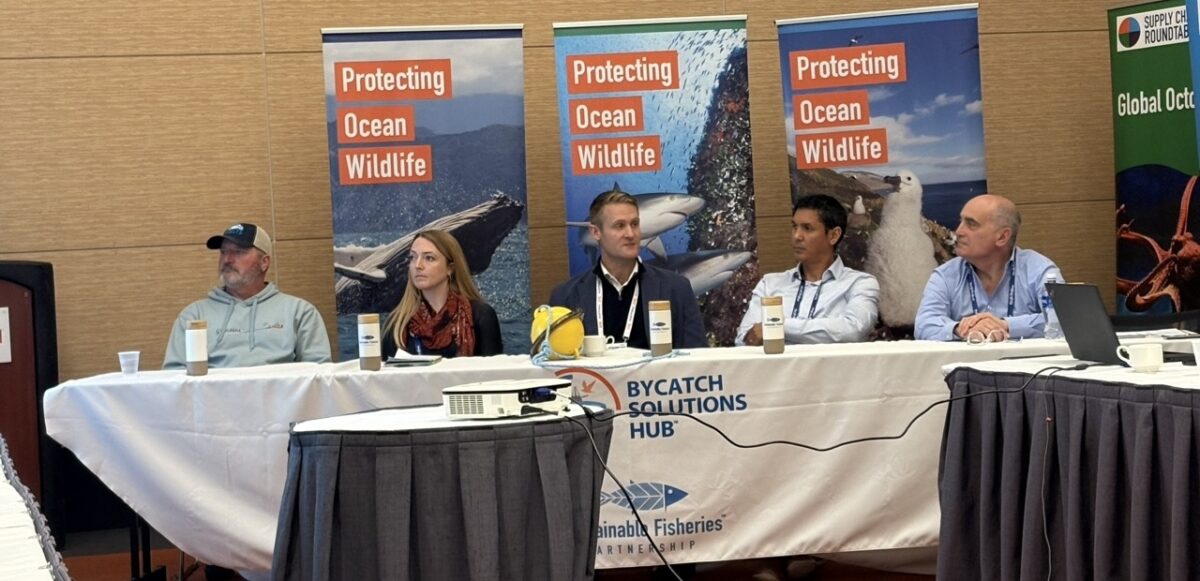
(L-R) Kevin Rand, SMELTS; Meghan Martin, The Nature Conservancy; Ryan Lind, Blue Ocean Gear; Teddy Escarabay, SFP Latin American Fisheries Director; Michael Cohen, International Seafood Sustainability Foundation
Involving fishermen in the conversation is key for successful development and implementation of innovative gears that reduce bycatch in wild-capture fisheries, the “Bycatch and Innovative Fishing Gear Technologies” panelists noted this afternoon.
“Awareness is really important,” said Ryan Lind, of Blue Ocean Gear, which makes satellite-connected Smart Buoys to help fisher more effectively track and recover their gear. “We are trying to make something that is as useful to as many people as possible, and the only way to get there is having lots of conservations with fishers and then design and redesign again and again,” he said adding that the Smart Buoys were “designed for fishermen by fishermen.”
Meghan Martin of The Nature Conservancy, presenting TNC’s Shark Bycatch Mitigation Decision Support Tool, noted that it is vital to have “co-development of fishers to craft solutions that are place-based and doable and won’t reduce your profits. She added that peer-to-peer knowledge sharing among fishers from different regions can be really powerful in spreading the word about innovative gear.
Kevin Rand, of SMELTS, which makes and distributes on-demand gear systems to reduce whale entanglements, has worked closely with fishermen to test and improve the gear. “It wasn’t that long ago that this was thought impossible, but now you have fishers who can catch during area closures and sell at a premium price,” he said. “We’ve proven it’s possible, and at this point, there are more fishermen showing up to the table who want to get in on the program and use the gear than there is gear available.”
It is also important to give fishers incentives to use the gear, said Teddy Escarabay, SFP’s Latin American Fisheries Director, describing the Ocean Allies program, an international best fishing practices competition that has small-scale mahi fishers sending in videos of themselves releasing sharks, dolphins, and sea turtles.
As each fishery is different, one concern with innovative gear – and all developing technologies – is whether it will be transferable to other areas and fisheries. Michael Cohen, of the International Seafood Sustainability Foundation, explained that one of the reasons it has taken ten years to fully develop their biodegradable “jelly FADs” was the need to prove that they worked in all environments, to address such concerns. Although, Cohen added, we shouldn’t “let perfect be the enemy of the good.” It is important to get all kinds of gear out there, get experience, and get input from all parties. “The more we can integrate everybody’s needs, the better and more resilient the solutions will be.”
The panelists also noted that it is important to involve regulatory agencies such as regional fisheries management organizations (RFMOs) in the development and testing of innovative gear, so that they are bought in and understand the challenges and opportunities of the gear.
In response to concerns that increased costs will make the use of innovative gear unrealistic, Rand noted that the biggest concern for fishermen is not being able to fish. “What’s more expensive? Fishing with on-demand fishing gear with some support, or just not going fishing at all? If you can fish during an area closure instead of not fish, that’s better.”