On June 8–9, 2026, I participated in the Whales Are In Our Nature event hosted by Pew Charitable Trusts, Oceans North Conservation Society, Canadian Wildlife Federation, and Georgia Strait Alliance. The event brought together members of the whale conservation community, federal government representatives, and other key stakeholders to advance meaningful action for whale protection across Canada in support of Canada’s 2026–2030 Whale Safe Fishing Gear Strategy.
The event began with an evening reception on June 8 in recognition of World Oceans Day, featuring opening remarks from the Honorable Joanne Thompson, Canada’s Minister of Fisheries, Oceans and the Canadian Coast Guard.
Charting a path to market for whale-safe seafood
On June 9, I facilitated the Coexistence of Fisheries and Whales: North Atlantic Right Whale Entanglement Solutions Workshop, which SFP helped host. The workshop focused on the implementation of on-demand (ropeless) fishing technologies in pot and trap fisheries across Canada, as well as supply chain perspectives, challenges, and opportunities associated with on-demand-caught seafood, and fishers’ willingness to adopt these new technologies.
Our discussion highlighted that advancing whale-safe seafood from pilot projects to commercial scale will require stronger market commitments, cross-sector collaboration, and concrete next steps from all stakeholders. Although participants acknowledged that discussions around bringing on-demand-caught lobster and crab to market are still in their early stages, there was broad recognition of increasing interest among seafood buyers, retailers, and suppliers.
Participants also highlighted that ongoing and anticipated fishery closures related to whale protection remain a significant concern for industry stakeholders due to their impact on product availability and profitability. They emphasized that economic incentives, including potential price premiums, will be essential to encourage fishers to adopt on-demand (ropeless) fishing technologies. A key challenge and opportunity identified was the need to develop reliable systems to segregate, verify, and trace lobster and crab harvested using on-demand gear throughout the supply chain. They also acknowledged that understanding consumers’ willingness to pay for verified whale-safe seafood will be critical for assessing long-term market viability and scaling potential. Overall, there was strong agreement that cross-supply chain collaboration, including buyers, suppliers, processors, retailers, government agencies, and conservation organizations, will be necessary to build market demand, support adoption, and advance whale conservation outcomes.
A season marked by entanglement
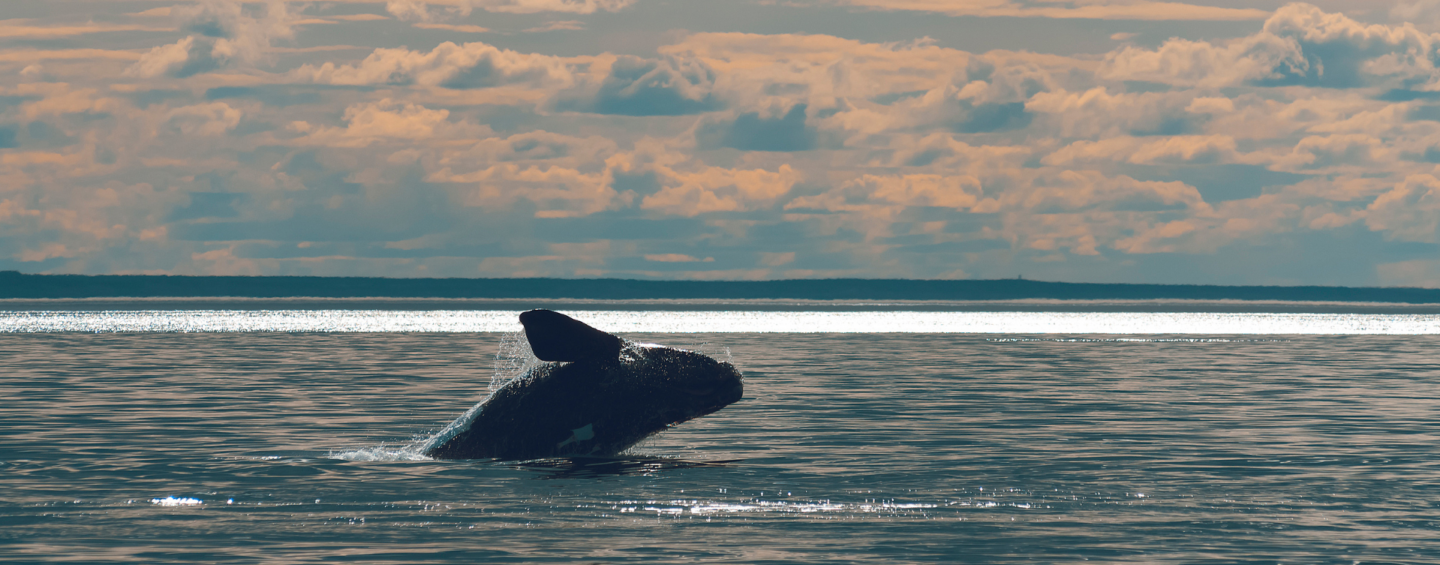
Unfortunately, the event coincided with the entanglement of a juvenile North Atlantic right whale (NARW). The whale was documented swimming with a line entangled along the left side of its mouth, trailing behind its flukes and extending into the water column. Responders located the whale near the Magdalen Islands, Canada; however, adverse weather conditions prevented a successful disentanglement. The whale, a five-year-old male (#5192), had previously been observed gear-free in U.S. waters on April 21, 2026, in Massachusetts Bay. As of June 26, 2026, the whale has not been sighted again.
Sadly, 2026 has also seen the loss of North Atlantic right whale “Division” to entanglement in Canadian ghost gear, as well as the continued entanglement of “Monarch” in a single lobster trap set in Massachusetts state waters. In addition, a right whale calf was found dead earlier this year, with the cause of death still unknown.
North Atlantic right whales are not the only species affected by entanglement in fixed fishing gear. On June 14, 2026, the Center for Coastal Studies Marine Animal Entanglement Response Team successfully disentangled a young humpback whale that had become anchored in fishing gear within the Stellwagen Bank National Marine Sanctuary (US). Although the whale sustained injuries from the entanglement, responders remain optimistic about its recovery.
Fishery closures raise the stakes
The June 9 event also coincided with seasonal fishing closures in Canada triggered by the presence of endangered North Atlantic right whales. At the time, the closures impacted approximately 65% of the region’s pot and trap fishing fleet. The unprecedented closure generated significant concern within the fishing community, resulting in a substantial increase in inquiries regarding the use of on-demand gear and highlighting uncertainty surrounding the economic impacts of whale protection measures.
These incidents underscore the importance of advancing and implementing whale-safe fishing technologies, including on-demand fishing gear, to better protect marine mammals while supporting the long-term sustainability and resilience of the seafood industry. Continued discussions, such as those held on June 9, further highlight the need for sustained dialogue and effective partnerships among stakeholders.
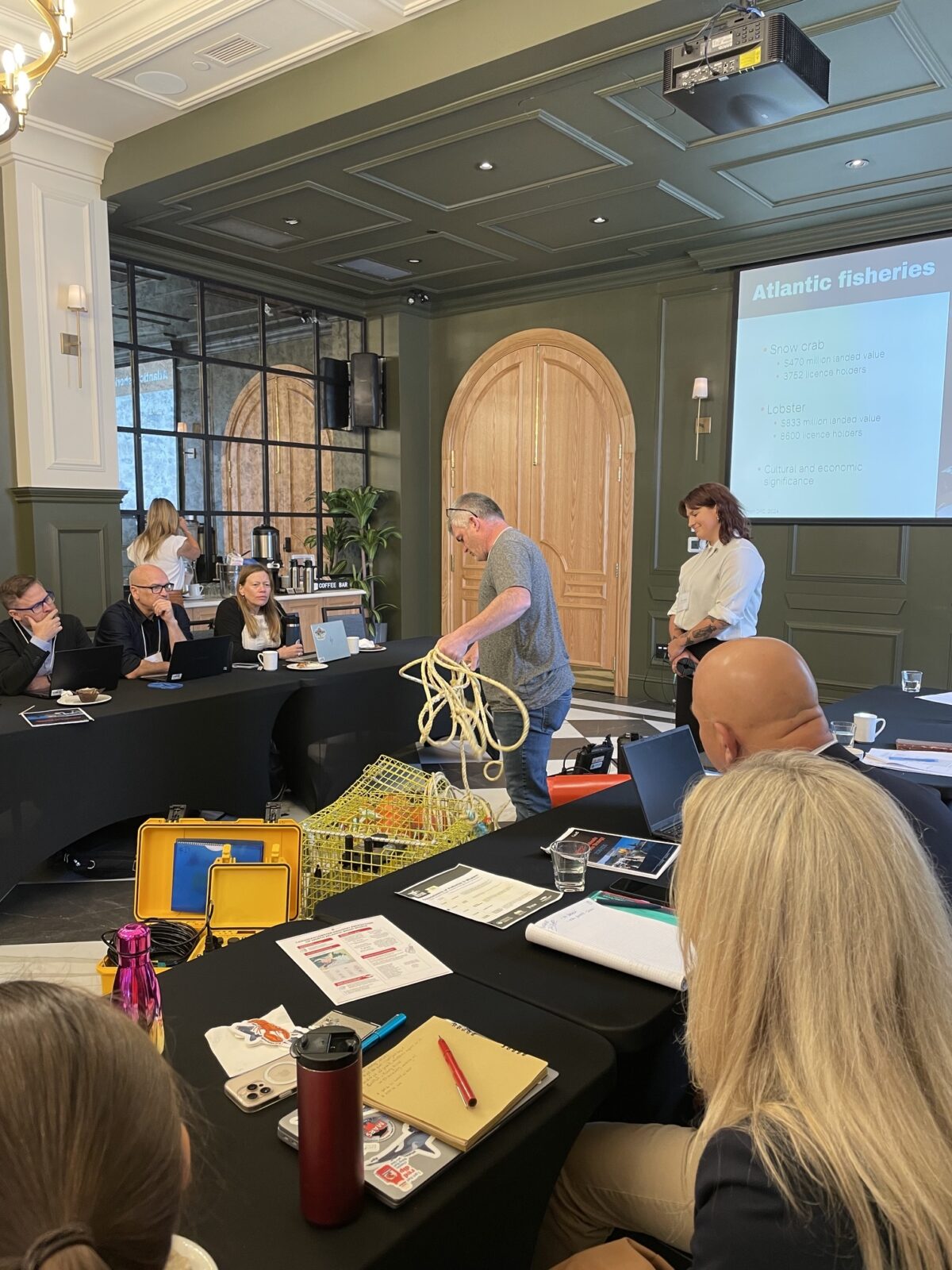
Fisherman Alden Gaudet and Canadian Wildlife Federation Gear and Operations Specialist Sahra Skripsky presenting on-demand fishing gear at the meeting
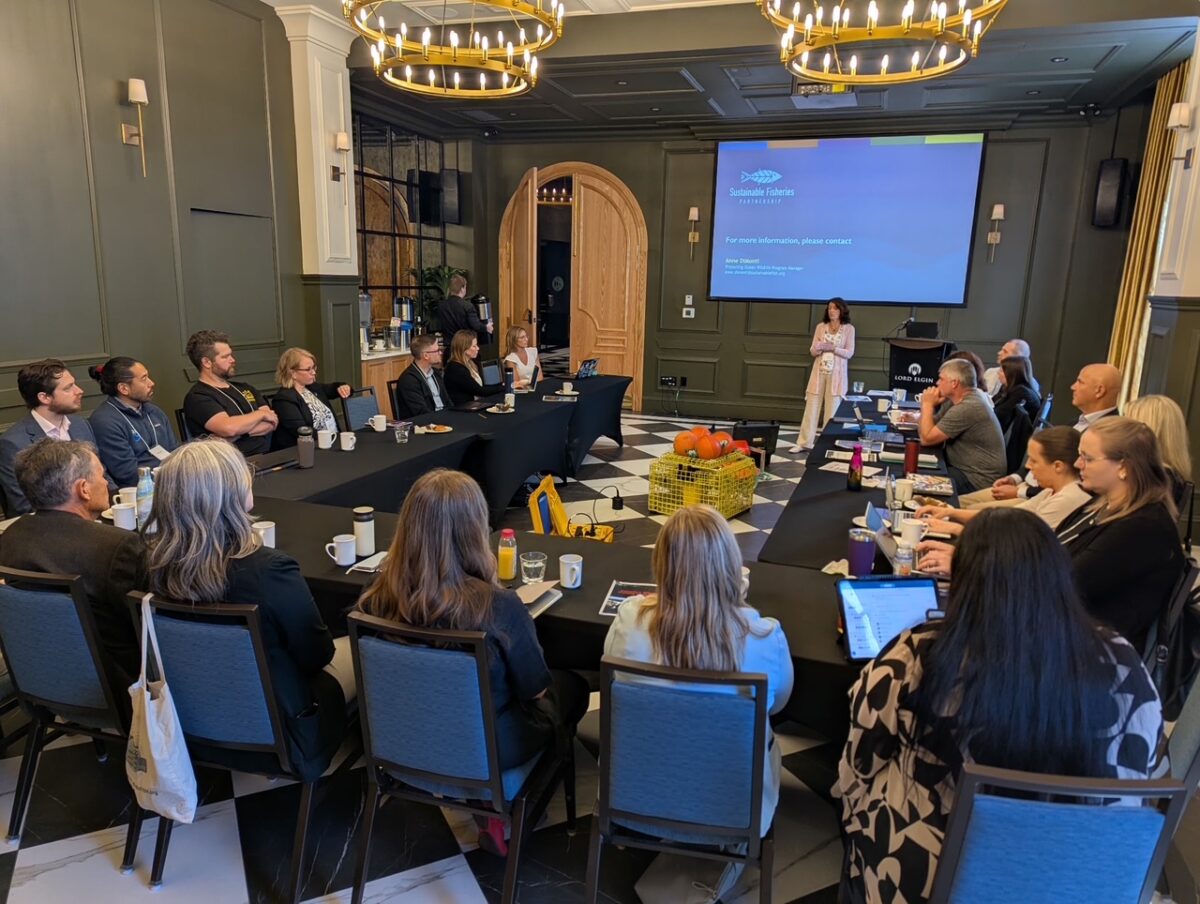
Anne facilitating the “Coexistence of Fisheries and Whales: North Atlantic Right Whale Entanglement Solutions” workshop held at the meeting