This is part of a series of blogs from SFP staff about our collaborative efforts to improve fisheries management in the Gulf of Thailand through the GoTFish Project. The project brings together a regional, multi-stakeholder initiative, funded by the Global Environment Facility (GEF) and implemented by the Food and Agriculture Organization of the United Nations (FAO), in partnership with the Southeast Asian Fisheries Development Center (SEAFDEC), SFP, and the University of Queensland.
Earlier this summer, the FishSource team stepped away from our remote offices around the world and came together in Thailand to explore the unique challenges of multispecies fisheries. Multi-species/multi-gear (MSMG) fisheries, which account for more than 70% of fisheries worldwide and dominate tropical regions, involve the harvesting of multiple species using various fishing gears within the same ecosystem. Because of the complexity of these fisheries, traditional single-species approaches are often inadequate, and management must consider trade-offs among production, conservation, ecosystem resilience, employment, and profitability.
To address these challenges, the standard approach to sustainable fisheries management is undergoing a major transformation, moving beyond traditional single-species assessments toward a more holistic Ecosystem Approach to Fisheries Management (EAFM). This shift recognizes that sustainable seafood cannot be measured solely by the status of individual fish stocks, but must also consider the health of entire ecosystems, the well-being of fishing communities, and the effectiveness of governance. EAFM therefore integrates broader ecological, social, and management indicators alongside traditional measures such as biomass and catch levels.
SFP team workshop
The SFP FishSource Multispecies Workshop, an activity under the GoTFish Project, focused on the importance of ensuring that multispecies fisheries are accurately documented in FishSource and understanding how they align with an ecosystem-based management approach.
Our key topic of conversation was how to widen FishSource from traditional single-species assessments to more comprehensive multi-species management models. In many regions, but especially in tropical regions such as the Gulf of Thailand, fisheries target and catch a wide variety of species simultaneously. To address this reality, we need to move beyond single-species models and use an ecosystem approach to fisheries management that considers the health of the entire marine ecosystem, rather than focusing only on individual fish stocks.
As part of this transition, FishSource will align with FAO guidelines and update its scoring methodology to assess the adaptive and responsive nature of fisheries management in multi-species contexts. This marks a shift from evaluating the impacts on individual fisheries to assessing the management of the broader ecosystem.
Collaboration is critical
The workshop’s success was driven by its collaborative and hands-on approach. Through active participation and productive exchanges between local Thai experts and participants from across the region, the team developed a roadmap for updating the FishSource monitoring platform.
Ultimately, the workshop highlighted that effective ocean conservation depends on collaboration and shared knowledge. By bringing together local expertise and global scientific perspectives, the GoTFish project is making important progress toward advancing more sustainable and ecosystem-based fisheries management. The partnerships and insights developed in Bangkok provide a strong foundation for a more inclusive approach to sustainable fishing, supporting healthier marine ecosystems in the region.
Getting out into the field
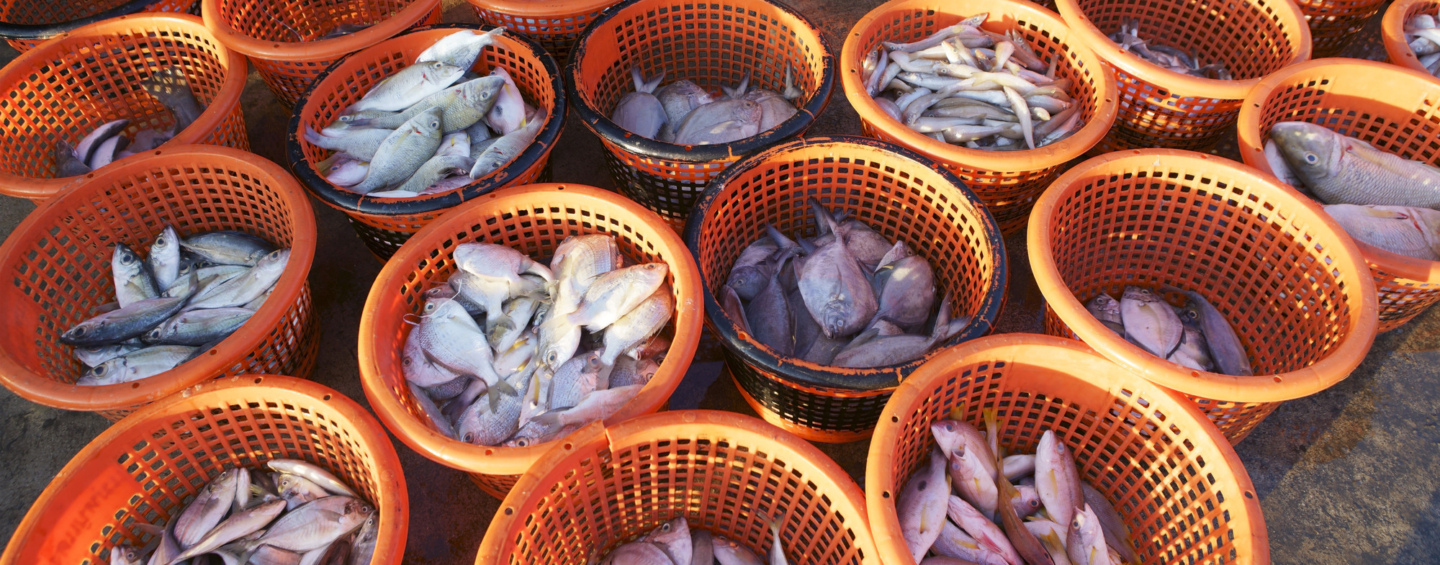
The multispecies workshop wasn’t just confined to a hotel conference room. Participants went on a field trip to Samut Sakhon province, hosted by the Thai Department of Fisheries, to see local fish landing operations, including a Port In Port Out (PIPO) Control Centre and several other local landing sites. Inspection teams provided comprehensive presentations on their daily processes and showcased their transparent, on-the-ground efforts to combat illegal, unreported, and unregulated (IUU) fishing in the region. We got to see seafood being unloaded from two Thai beam trawlers and watched a locally based catch documentation officer logging the species and volumes being landed.
Following the workshop, our fisheries consultant Duncan Leadbitter joined our colleague Leang On Pong for a short field mission in Cambodia to gather further information on the supply chains of anchovies used by fish sauce and fishmeal producers. (Read Leang On’s earlier blog on Cambodia’s fish sauce sector.) The mission aimed to improve understanding of fishing practices, including gear types and fishing grounds, identify stock assessment priorities, and gather insights into sourcing and traceability issues relevant to the GoTFish project. The team also collected additional information on sourcing and traceability practices within the fish sauce and fishmeal sectors through visits to fish sauce and fishmeal factories. This visit was part of SFP’s work under the GoTFish project to address knowledge gaps about species composition of catches, fishing volumes, gear types, fishing locations, and the legality of some activities, including potential transhipment practices in Cambodia. Addressing these uncertainties will be essential for improving fisheries assessments and supporting effective management strategies.
A regional multispecies workshop
While we were in Bangkok, the FishSource team also participated in the Regional Workshop on Key Challenges and Practical Solutions for Multispecies/Multigear (MSMG) Fisheries Management, co-organized by the Food and Agriculture Organization of the United Nations (FAO) and the Southeast Asian Fisheries Development Center (SEAFDEC). Workshop participants included national stock assessment scientists, fishery managers, and policymakers from the SEAFDEC Member Countries in Southeast Asia (Cambodia, Indonesia, Malaysia, the Philippines, Thailand, and Viet Nam), and from South Asian member countries of the Bay of Bengal Programme (Bangladesh, India, the Maldives, and Sri Lanka).
The workshop explored the challenges and potential solutions for assessing and managing multispecies–multigear (MSMG) fisheries and introduced a new three-pillar evaluation framework – Species Groups, Indicator Species, and Ecosystem – as the foundation for MSMG assessments.
This event was an inspiring experience, bringing together teams from different countries, each representing unique fisheries management contexts. Participants shared information about their fisheries and current management arrangements, engaged in productive discussions about the similarities and differences across their fisheries, defined objectives and indicators for their priority fisheries, tested an FAO-developed MSE tool, and developed, as exercises, draft Fisheries Management Plans (FMPs) and Harvest Strategies.
For the FishSource team, the workshop also provided a valuable opportunity to better understand the diverse challenges, priorities, and management needs across the region. We are sincerely grateful to all the participants for their warm welcome, openness, and willingness to share their knowledge and experiences.
Lessons from the GoTFish project – From Fisheries to Ecosystems
The knowledge and insights gained through these workshops and field missions have greatly improved our understanding of the challenges and realities faced by multispecies–multigear fisheries. Back in our offices around the world, we will build on these experiences in Thailand and Cambodia to guide the adaptation of FishSource systems and methodologies, develop a more comprehensive framework for evaluating MSMG fisheries, and strengthen FishSource as a global tool for monitoring fisheries sustainability.